Palm Springs Mid-Century Styles: A Buyer’s Guide
January 1, 2026
January 1, 2026
Love the clean lines, glassy living rooms, and sunlit courtyards you see in Palm Springs listings, but not sure how to tell a butterfly roof from a classic post-and-beam? You are not alone. Many buyers love the look but want help sorting style from substance as they tour homes. This guide gives you the vocabulary, context, and practical tips to evaluate mid-century homes with confidence. You will learn what defines Desert Modern design here, what to watch for on tours and inspections, and how to balance preservation with modern comfort. Let’s dive in.
Palm Springs became a hub for mid-century modern after World War II, roughly from the mid-1940s into the 1960s and 1970s. Population growth, a rising leisure culture, and a steady stream of architects and clients shaped a local take on modernism that fit the desert.
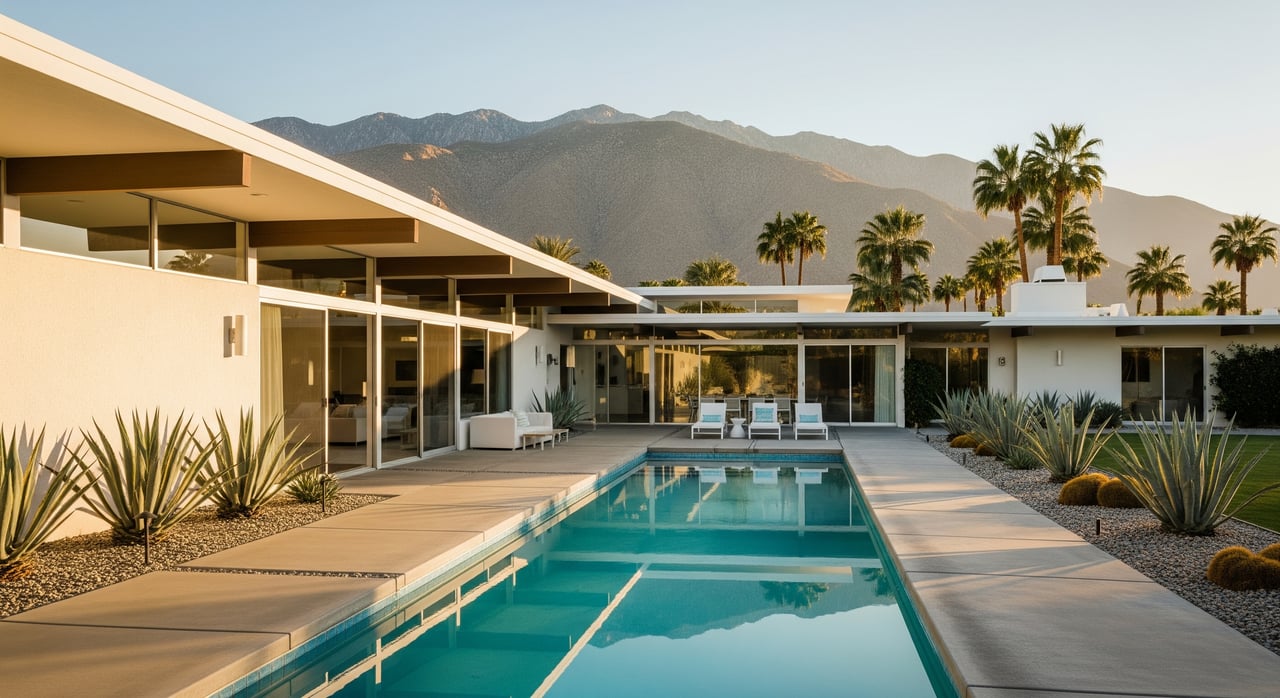
You will hear the term Desert Modern. It shares the clean lines and open plans of mid-century modern but adapts them to the climate: deep overhangs for shade, low rooflines, and indoor–outdoor rooms that connect to pools, courtyards, and views. The city’s popularity with celebrities and visionary designers helped spread the look.
Names you might encounter include Albert Frey, Richard Neutra, John Lautner, E. Stewart Williams, William Krisel, and Donald Wexler. Their work ranges from dramatic custom hillside homes to elegant tract neighborhoods and innovative steel houses. Local culture celebrates this heritage through events, museum resources, and preservation groups that document and protect notable properties.
Mid-century homes in Palm Springs are easy to spot once you know the basics.
Two roof planes slope up to a central valley. The profile feels dynamic and emphasizes horizontal lines. It creates opportunities for clerestory windows but concentrates drainage in the center, so you should check membranes, gutters, and valley details for wear.
High, narrow window bands bring daylight in while maintaining privacy. These help brighten deeper floor plans. When touring, note glare control, heat gain, and the condition of seals and frames.
Expanses of sliding glass and fixed panels connect living areas to patios and pools. Original glazing often used single-pane aluminum frames that look slim and elegant. Ask about restoration, weatherstripping, and whether any upgrades preserved the original sightlines.
Exposed beams carry the roof and allow open interiors without many load-bearing walls. You get flexible layouts and long glass spans. Look for signs of movement at beam connections and check for staining that may point to past roof leaks.
Thin window profiles and metal columns are part of the aesthetic. In the desert, irrigation overspray and shaded pockets can speed corrosion. Inspect metal for rust and note any repairs.
Concrete block, stucco, and natural stone create strong, simple facades and privacy screens. Block walls often frame courtyards and outdoor rooms. Look for cracks, patchwork repairs, and water staining near grade.
Many homes use enclosed or semi-enclosed courtyards for shaded living areas protected from wind. These spaces are central to the lifestyle. Pay attention to drainage, door thresholds, and how well the courtyard connects to interior rooms.
Pools often sit close to the house to function as part of the living area. Original landscapes ranged from irrigated lawns and palms to gravel beds and desert plantings. Consider modern water-wise updates that respect the home’s character.
Architects like Neutra and Lautner created one-of-a-kind designs that respond to views and terrain. Expect dramatic forms, site-specific solutions, and premium materials. Plan for specialized inspections and bespoke maintenance.
Architects such as William Krisel helped deliver stylish, efficient homes at scale. You will see repeating motifs like butterfly roofs, clerestories, and modest footprints. Many of these homes retain strong original character and are popular with buyers seeking classic Desert Modern at a more accessible price point.
Donald Wexler’s steel houses and similar experiments used factory-made components for speed and precision. These homes offer a distinct look and may require metal-specific maintenance strategies.
Many mid-century homes in Palm Springs may be eligible for local or national historic listing. Local designation can influence exterior changes, additions, or demolition. Interior features are less commonly regulated unless the property has exceptional interior significance.
Before planning exterior work, confirm whether the property has any historic status. Ask for prior design review approvals and check for surveys or recorded restrictions. This step helps you avoid surprises if you plan changes to rooflines, windows, or primary facades.
You may want modern performance but also want to keep original character. There are practical ways to do both.
California’s Mills Act can offer property tax relief when local programs apply to designated historic homes. Availability and rules vary by city and by parcel, so verify status with planning and preservation offices. Plan for maintenance budgets that reflect the unique materials common to mid-century design. Disclosures about potential lead paint or asbestos are part of many transactions from this era and can affect insurance decisions.
During due diligence, review:
Low-slope roofs, flat roofs with parapets, and butterfly valleys need careful inspection. Look at membranes, flashing, parapet and valley drains, and any ponding evidence. Confirm that grading moves water away from the foundation.
Original aluminum or steel frames may have weak seals or corrosion. Check operation, seals, and evidence of air or water infiltration. Ask about prior restoration, retrofitted insulated glass, or full replacements that respect original sightlines.
Inspect exposed steel columns, beam ends, and lintels for corrosion. Review concrete block and stucco for cracks or delamination. Thermal swings in the desert can magnify minor issues over time.
Older systems may not meet modern comfort or capacity needs. Evaluate HVAC size, duct condition, and zones. Confirm electrical panel type, grounding, and circuit capacity. Check for galvanized supply lines or cast-iron drains that could be near end of life. Review water heater age and capacity.
Ask about pump efficiency, filtration type, and leak history. Confirm electrical compliance and serviceability of older equipment.
Homes from this era can include lead-based paint or asbestos in certain materials. If present, plan for safe management or abatement during renovations. Note that original floor-level glass may not meet current safety glazing standards.
Modern xeriscapes and drip systems can reduce water use. Check irrigation layout to avoid wetting foundations or metal elements, which can increase corrosion or pest risks.
On a quick tour, focus on character-defining elements: roof form, window patterns, visible post-and-beam, and how the living room engages the patio and pool. Study light quality and privacy from clerestories and glass walls. Scan ceilings for stains, look for warped door frames, patched stucco, or rust at metal columns. Outside, evaluate courtyard walls, planters, and how the landscape completes the architecture.
If you want to preserve authenticity, involve the right experts early. Look for inspectors familiar with low-slope roofs, post-and-beam, single-pane glazing, and steel details. For major work, hire roofing contractors with butterfly experience, historic window specialists, and HVAC pros who can deliver discreet, high-efficiency solutions such as ductless options. A phased plan works well: start with safety and comfort, then move to energy upgrades that respect the home’s design.
Buying a mid-century home in Palm Springs is both a design decision and a practical one. You deserve a team that can help you see the architectural value, navigate historic rules, and plan the upgrades that matter. Our approach blends on-the-ground expertise with video-first tours and remote-friendly guidance so you can evaluate options from anywhere and step in with confidence when it is time to write an offer.
Ready to explore Palm Springs mid-century homes with a clear plan? Reach out to The Jordan Team for local expertise, property video insights, and a smooth, design-conscious experience.
The Jordan Team | Schedule a Video Consultation
Palm Springs
How summer heat, winter seasonality, home maintenance, carrying costs, community rhythm, and California residency questions change when the desert is your primary home… Read more
Construction is underway near Highway 111, but sales have not opened yet. Here is what Shea Homes has published so far about pricing, home sizes, architecture, ameniti… Read more
Palm Springs
What buyers should know about everyday driving, I-10 vs. Highway 111, seasonal congestion, event traffic, weather closures, transit, and testing real routes before cho… Read more
With ten years of experience as a licensed agent, Tommy is an innovator in utilizing social media marketing to help sell homes. He has a successful YouTube channel with thousands of subscribers, generating hundreds of thousands of views yearly. He stays updated on the latest marketing techniques and ensures each property stands out.
Contact Tommy to Learn More
74801 Hovley Ln E. Palm Desert, CA 92260 Tommy Jordan | CA DRE# 01887038