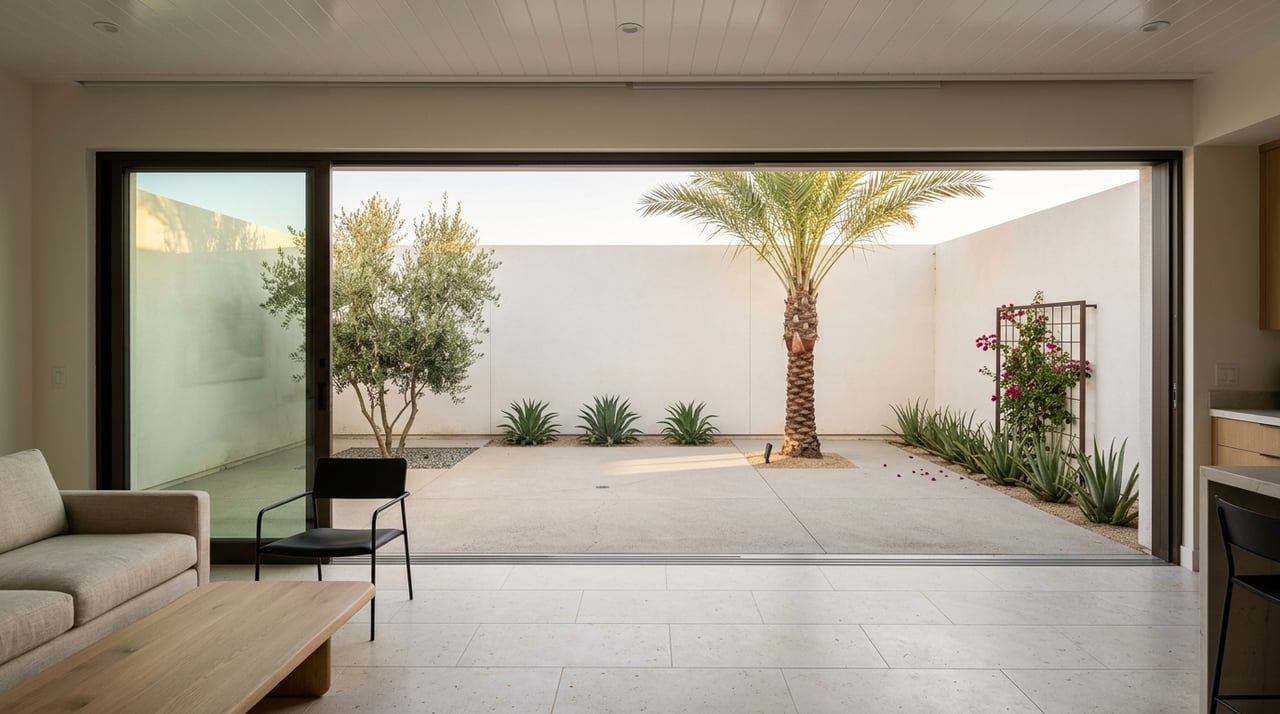
Living Between Corona Del Mar And Palm Desert
July 9, 2026
July 9, 2026
If you love the idea of splitting time between the coast and the desert, Corona del Mar and Palm Desert make a surprisingly practical pair. You get one home base with mild ocean weather and year-round activity, plus another setting built around sunshine, seasonal living, and a different pace. If you are trying to picture how this lifestyle actually works, this guide will help you think through climate, travel, and day-to-day planning. Let’s dive in.
Corona del Mar is a village within Newport Beach known for its state beach, ocean views, and walkable commercial core with shops, restaurants, boutiques, and Sherman Library and Gardens. It offers a classic coastal setting that stays active throughout the year. That makes it a natural anchor for people who want consistency in their daily routine.
Palm Desert brings a different kind of value. The city describes itself as the cultural and retail center of the desert communities, and it reports 32,000 seasonal residents in addition to 53,087 permanent residents. That seasonal pattern matters because it shows how normal part-time living is in Palm Desert.
Taken together, these two places create two operating modes for your lifestyle. The coast can support your everyday rhythm, while the desert can give you a warm seasonal retreat with a change of scenery and pace.
Newport Beach Harbor climate normals show an annual average high of 68.2°F and an annual average low of 57.3°F, with 9.43 inches of yearly precipitation. In July and August, average highs are 71.8°F and 73.3°F, while average lows are 64.6°F and 65.5°F. That kind of range is one reason the coast often feels usable all year.
The City of Newport Beach also staffs Corona del Mar State Beach through its lifeguard division 365 days a year. That is a helpful reminder that this is not just a summer destination. It supports an active beach lifestyle in every season.
Palm Desert’s general plan describes a hot, arid desert climate, with summer temperatures frequently above 100°F. Using the Palm Springs region as a climate proxy, NOAA normals show an annual average high of 88.9°F and an annual average low of 62.3°F, with 4.61 inches of annual precipitation. July and August average highs reach 108.6°F and 108.1°F.
That does not make Palm Desert less appealing. It just changes when the area tends to feel most comfortable for longer stays. Winter and the shoulder seasons usually make the desert home especially attractive.
If you plan to live between Corona del Mar and Palm Desert, spring and fall often give you the smoothest overlap. March through May and October through November can make it easier to divide your time without moving between mild coastal weather and peak desert heat.
In the desert, average highs move from 80.6°F in March to 86.7°F in April and 91.1°F in October. During those same stretches, Newport Beach Harbor stays in the mid-60s to low-70s. That creates a very workable crossover window for longer visits, guest stays, and household transitions.
For many second-home owners, these months are when the two-home setup feels most flexible. You can spend more time in either location without having to plan around weather extremes.
A simple way to think about this is to make your primary home the one that best supports year-round life. That usually means the home that works best for your regular schedule, storage, errands, healthcare access, and social routine. Then your secondary home becomes the one that delivers seasonal relief or recreation.
In this pairing, Corona del Mar often makes sense as the primary base. The weather is milder throughout the year, and the beach infrastructure is active every day. Palm Desert often works well as the secondary or seasonal home because the city has a strong seasonal rhythm and much hotter summers.
That said, this is not a hard rule. Your ideal setup depends on how you work, travel, host, and spend your time across Southern California.
One reason this lifestyle works is that the two markets are close enough for regular use. The drive from Corona del Mar to Palm Desert is about 115 miles, and Travelmath estimates typical drive time at 2 hours and 5 minutes. That makes weekend transitions realistic for many owners.
Still, this is not the kind of trip most people treat like a quick errand. If you are moving between homes often, it helps to think in terms of planned transitions rather than spontaneous back-and-forth travel.
John Wayne Airport serves Orange County and is the practical airport for Corona del Mar. The airport recommends arriving 1.5 to 2 hours before departure and offers nonstop service to destinations across the United States, Canada, and Mexico.
Palm Springs International Airport is the only commercial service airport in the Coachella Valley. It is about two miles from downtown Palm Springs and is served by nine airlines with nonstop flights to 31 airports. PSP also notes that airline ticket counters typically open about two hours before departure.
For you, that means both sides of this lifestyle can connect well to broader travel. Depending on where a trip starts or ends, you may have the option to access either home by car or by air.
Owning or using homes in both Corona del Mar and Palm Desert works best when you build simple systems around the split. The goal is not just to own in two great places. The goal is to make the transition between them feel easy.
A few planning ideas can help:
These decisions may sound small, but they can make a two-home setup feel much more seamless.
For many buyers, the appeal is not about choosing coast or desert. It is about using both settings for different parts of the year. Corona del Mar gives you a temperate, ocean-centered base, while Palm Desert offers a warm seasonal contrast with a strong second-home rhythm.
That is especially relevant for buyers coming from Orange County and other parts of Southern California. You can keep one foot near the coast while adding a desert home that supports seasonal living, weekend use, or longer winter stays.
If you are considering this type of move, the real estate strategy should match the lifestyle. A coastal primary home and a desert second home create different priorities than two equally used residences. You may care about lock-and-leave convenience, seasonal occupancy patterns, guest use, or a smoother relocation path between markets.
That is where local guidance matters. You want a plan that fits how you will actually live, not just how a property looks online.
If you are exploring Palm Desert as part of a coast-to-desert lifestyle, The Tommy Jordan Team can help you compare neighborhoods, narrow your options, and build a buying or selling strategy around how you plan to use the home.
Palm Springs
How summer heat, winter seasonality, home maintenance, carrying costs, community rhythm, and California residency questions change when the desert is your primary home… Read more
Construction is underway near Highway 111, but sales have not opened yet. Here is what Shea Homes has published so far about pricing, home sizes, architecture, ameniti… Read more
Palm Springs
What buyers should know about everyday driving, I-10 vs. Highway 111, seasonal congestion, event traffic, weather closures, transit, and testing real routes before cho… Read more
With ten years of experience as a licensed agent, Tommy is an innovator in utilizing social media marketing to help sell homes. He has a successful YouTube channel with thousands of subscribers, generating hundreds of thousands of views yearly. He stays updated on the latest marketing techniques and ensures each property stands out.
Contact Tommy to Learn More
74801 Hovley Ln E. Palm Desert, CA 92260 Tommy Jordan | CA DRE# 01887038