5 Reasons Buyers Are Moving to the Palm Springs Area
Palm Springs Tommy Jordan July 16, 2026
Palm Springs Tommy Jordan July 16, 2026
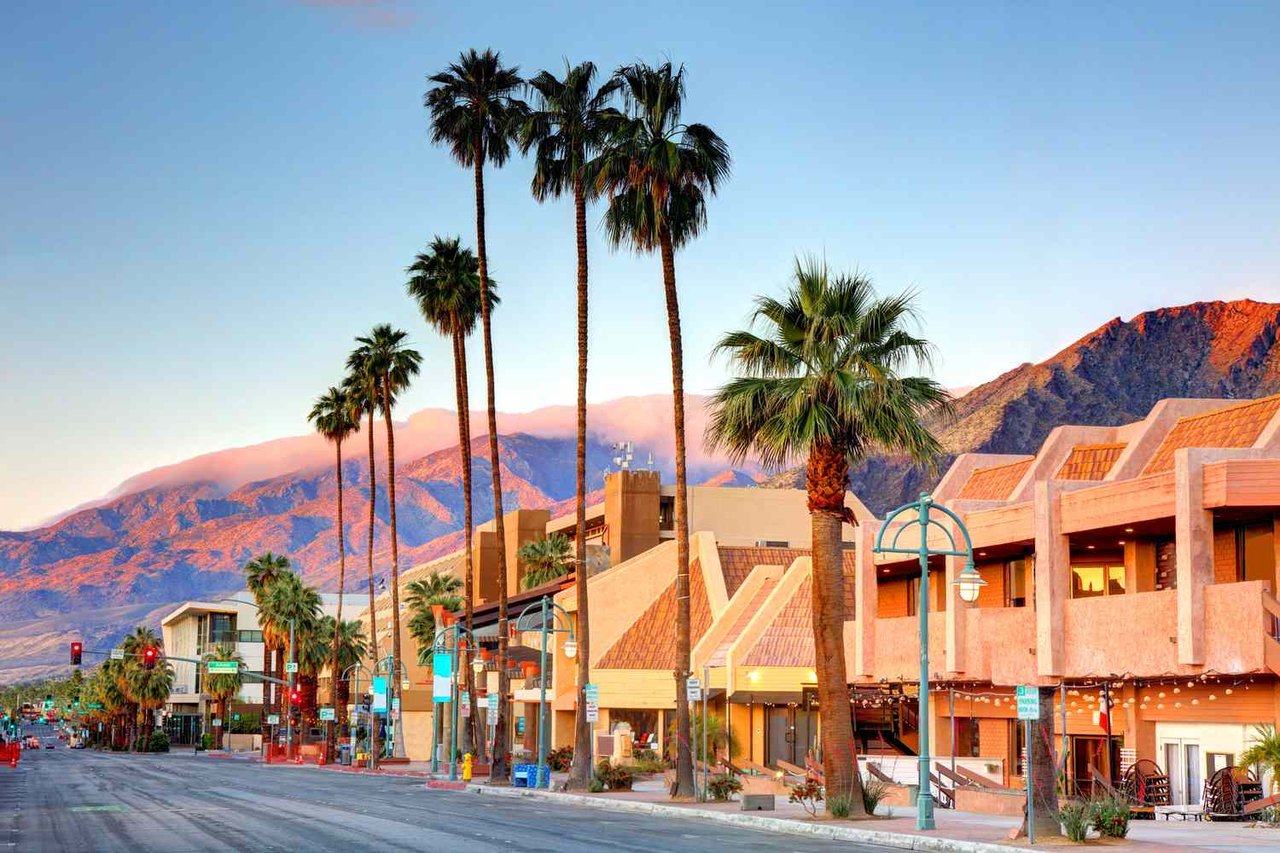
Moving to the Palm Springs area is often described as a lifestyle decision, and it is easy to understand why. The desert offers palm trees, mountain views, pools, golf, distinctive architecture, and a pace that feels very different from coastal Southern California.
But the reasons people relocate here are not limited to scenery or vacation appeal.
Many buyers are also looking for easier everyday drives, more housing choices for their budget, dependable winter sunshine, and a place where recreation and relaxation are built into daily life.
Those advantages come with real trade-offs. Summer temperatures are extreme, home values vary widely by city and neighborhood, and the right location depends on whether you want a walkable downtown, a golf community, newer construction, or a quieter residential setting.
This guide explains five reasons people are moving to the Palm Springs area and what buyers should consider before deciding whether the desert fits the life they want.
People are moving to the Palm Springs area for easier everyday drives, housing that can compare favorably with expensive coastal California markets, warm and sunny winter weather, dramatic mountain scenery, and a relaxed desert lifestyle. The best fit depends on your budget, tolerance for summer heat, preferred city, and whether the home will be a full-time residence, seasonal property, or second home.
This guide combines local observations from Tommy Jordan, a Palm Springs area real estate agent who leads The Tommy Jordan Group at eXp Realty, with current U.S. Census Bureau data, NOAA climate normals, City of Palm Springs resources, and official Greater Palm Springs tourism information.
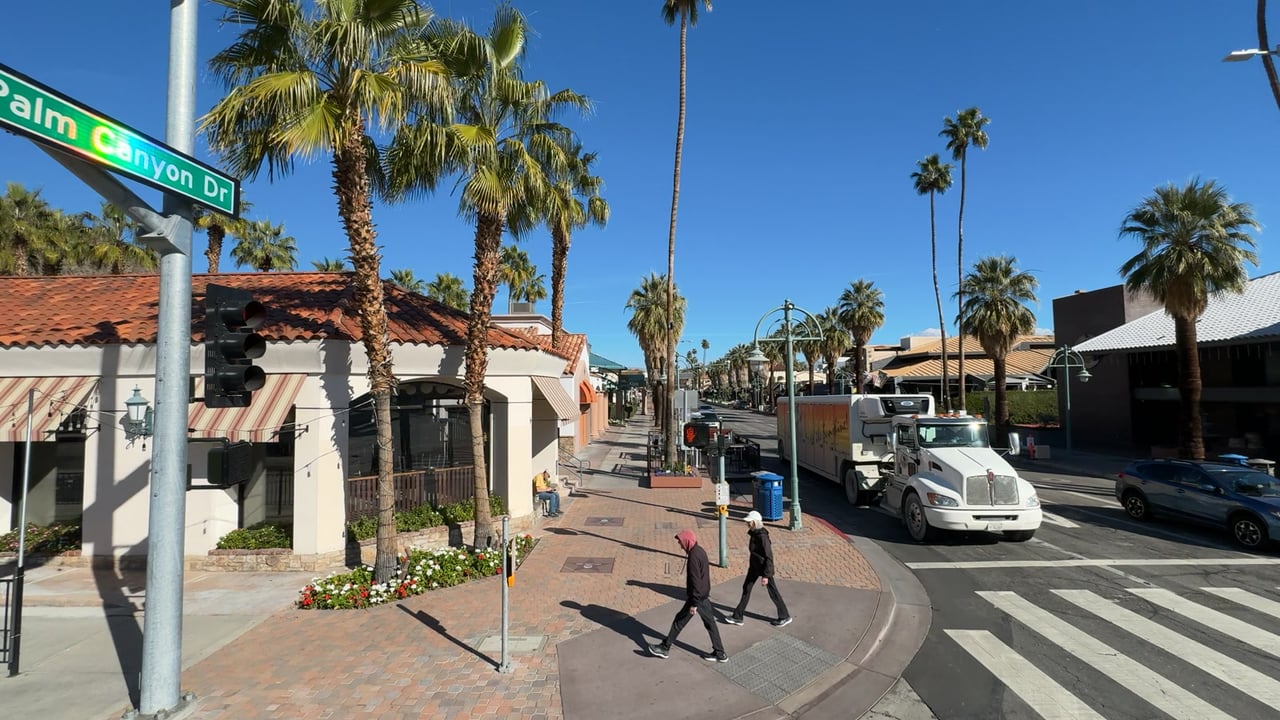
Tommy's first reason is simple: many people moving from Los Angeles, Orange County, San Diego, or another heavily congested market notice that routine errands can feel easier in the desert.
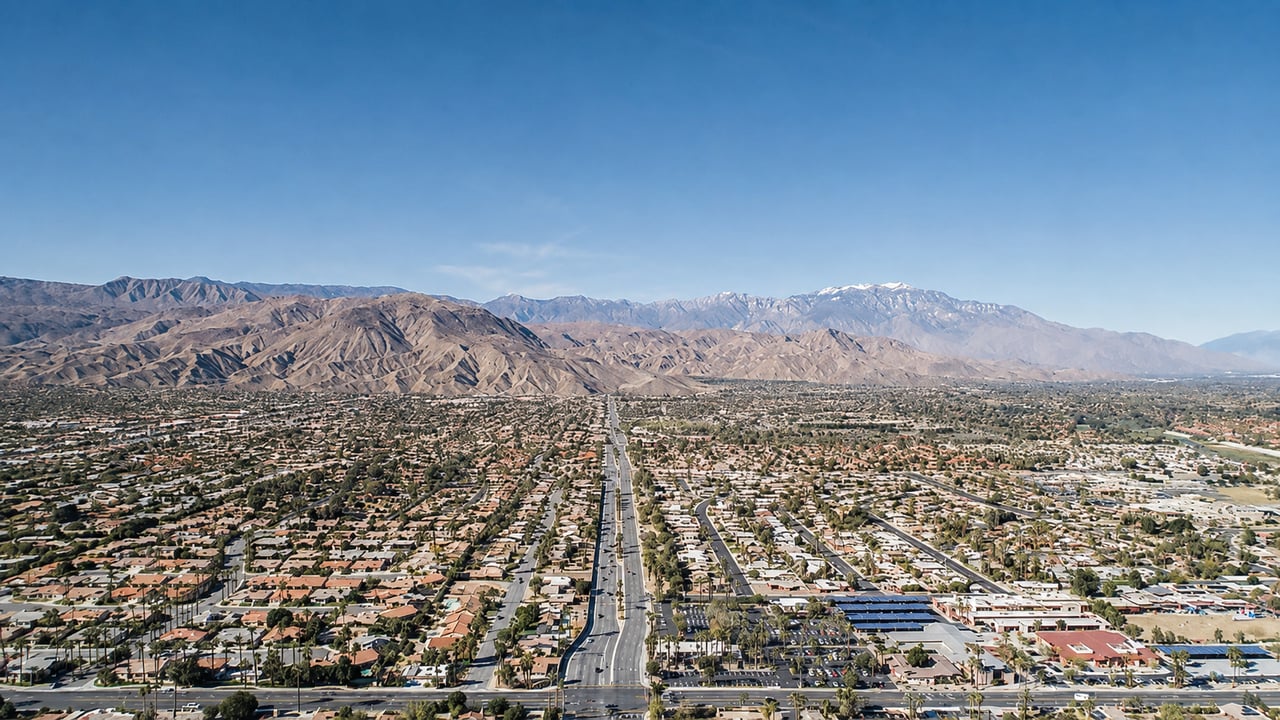
Palm Springs is not literally traffic-free. Interstate 10, Highway 111, major events, construction, and the winter season can all create congestion. The practical difference is that the Coachella Valley is less densely developed than the largest coastal metro areas, and many daily destinations are reached without the same level of freeway dependence.
U.S. Census Bureau estimates for 2020-2024 report a mean travel time to work of 22.2 minutes for Palm Springs, compared with 26.7 minutes for Orange County and 30.4 minutes for Los Angeles County. Commute data does not measure every errand or guarantee a fast trip, but it supports the broader point that many residents spend less time commuting than they did in larger Southern California markets.
"Living out here, you don't spend your life in the car." — Tommy Jordan
The valley also gives residents more than one way to move between cities. Interstate 10 is typically the fastest east-west route, while Highway 111 connects Palm Springs, Cathedral City, Rancho Mirage, Palm Desert, Indian Wells, La Quinta, and Indio through the developed center of the valley.
Before choosing a home, drive the routes you expect to use for groceries, healthcare, work, restaurants, golf, family visits, and the airport. A home that is central to your actual routine may save more time than one that simply looks close on a map.
The Palm Springs area is not inexpensive by national standards, and luxury homes can reach very high price points. However, some buyers coming from coastal Southern California find that their budget provides more options in the desert.
The U.S. Census Bureau reports a 2020-2024 median value of $604,000 for owner-occupied housing units in Palm Springs. The comparable figures were $962,600 for Orange County and $834,200 for Los Angeles County.
Those figures are not direct market-price comparisons. Palm Springs is a city, while Orange and Los Angeles are counties, and the data covers owner-occupied housing values rather than today's active listings. Still, the gap helps explain why some coastal buyers see the desert as an opportunity to obtain more space, a private pool, mountain views, distinctive architecture, or a second home at a lower entry point than they might find near the coast.
Value also changes substantially across the Coachella Valley. Palm Springs has condos, historic homes, midcentury properties, luxury estates, and newer infill. Palm Desert, Rancho Mirage, La Quinta, Indian Wells, Cathedral City, and Indio each offer different price ranges and community styles.
If you are comparing cities across the valley, read our guide to buying a home in Rancho Mirage and explore our La Quinta neighborhood guide to see how the communities, housing styles, and daily lifestyles differ.
You can browse current Palm Springs homes for sale to compare today's available properties rather than relying on a valley-wide rule of thumb.

Photo by Farragutful, CC BY-SA 4.0, via Wikimedia Commons.
Winter weather is one of the clearest reasons people relocate to or buy a second home in the Palm Springs area.
NOAA's 1991-2020 climate normals for Palm Springs Regional Airport show average daily highs of 70.5 degrees Fahrenheit in January and 73.7 degrees in February. The same station reports only 4.61 inches of normal annual precipitation.
That climate supports winter golf, hiking, outdoor dining, pickleball, pool time, and a more consistent outdoor routine than buyers may be used to in colder or wetter regions.
Summer is the trade-off. NOAA normals show average daily highs of 108.6 degrees in July and 108.1 degrees in August. Full-time residents often exercise and complete errands early, spend the hottest afternoon hours indoors, and return outside after sunset.
Before buying, evaluate the home's HVAC age, insulation, window exposure, shade, pool condition, solar arrangement, and recent utility history when available. A home that feels comfortable during a winter showing can operate very differently in July.
Start by getting your FREE Palm Springs Area Relocation Guide: download the Palm Springs Area Relocation Guide.
The Palm Springs area does not feel like a generic suburb transplanted into the desert. The San Jacinto and Santa Rosa Mountains frame much of the valley, while palms, desert landscaping, golf courses, canyons, and low-profile architecture create a recognizable visual identity.
Palm Springs is especially known for its architectural history. The City's Historic Resources program is intended to preserve buildings and areas that reflect Palm Springs' cultural, social, economic, political, architectural, and archaeological history.
That history is visible in midcentury neighborhoods, classic hotels, civic buildings, and residential properties designed around indoor-outdoor living. Buyers who care about architecture often find that Palm Springs offers a stronger citywide design identity than many other markets.
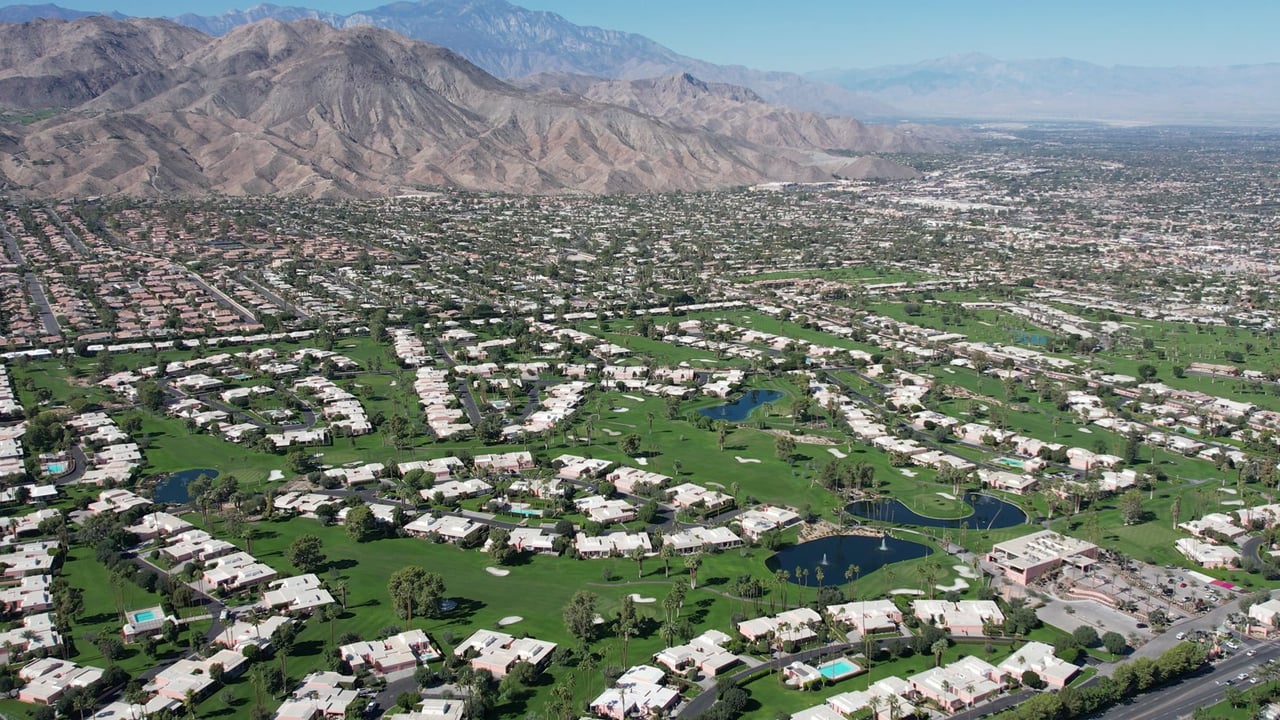
Recreation is another part of the appeal. Visit Greater Palm Springs reports that the broader destination has more than 100 golf courses, ranging from public and municipal layouts to private clubs and resort experiences.
Golf is only one option. Residents also use local trails, the Palm Springs Aerial Tramway, Indian Canyons, downtown restaurants, museums, events, tennis, pickleball, and nearby Joshua Tree National Park. The exact lifestyle changes by city and neighborhood, which is why buyers should compare the entire valley instead of assuming every desert community feels the same.
Our guide to Palm Springs versus Palm Desert explains how design, downtown activity, golf, shopping, and housing style differ between two of the area's most popular cities.

Photo by Visitor7, CC BY-SA 3.0, via Wikimedia Commons.
The final reason is harder to measure, but it appears repeatedly in Tommy's conversations with clients: people often feel more relaxed in the Palm Springs area.
Part of that may come from the weather and scenery. Part may come from the area's resort history, golf communities, outdoor recreation, casual dress, and large population of retirees, seasonal residents, and second-home owners.
Tommy's observation is that many people are here because they actively chose the lifestyle. They want to walk the dog under the palms, play golf or pickleball, meet friends downtown, spend time by the pool, and slow down from the pace they experienced elsewhere.
That does not mean every day feels like a vacation. Residents still manage work, errands, home maintenance, healthcare, traffic, and summer heat. The difference is that the surrounding environment can make recreation and downtime easier to build into the week.
Buyers should think carefully about which version of the desert lifestyle they want. Palm Springs may appeal to someone who values architecture, downtown energy, dining, and cultural events. Palm Desert may fit someone who wants a central location, shopping, and golf access. Rancho Mirage, Indian Wells, La Quinta, Cathedral City, and Indio each offer a different balance of privacy, amenities, price, and community style.
The desert can be an excellent fit, but the decision should be based on how you plan to live throughout the entire year.
Before narrowing your search, consider:
A strong relocation decision starts with lifestyle priorities, then uses price and property features to identify the right city and neighborhood.
People are moving to the Palm Springs area for reasons that go beyond the postcard image.
Everyday drives can feel easier than in major coastal markets. Housing may provide more options for some California buyers. Winter weather supports an active outdoor lifestyle. Mountains, architecture, golf, and cultural attractions create a distinct sense of place. And for many residents, the overall pace simply feels more relaxed.
The desert also requires clear expectations. Summers are extremely hot, individual neighborhoods feel different, and the true cost of ownership extends beyond the purchase price.
The goal is not to decide that everyone should move here. It is to determine whether the Palm Springs area offers the combination of climate, housing, location, and lifestyle that fits the way you actually want to live.
Common reasons include easier everyday drives than in major coastal metro areas, housing that may compare favorably with expensive California markets, warm winter weather, mountain scenery, golf and recreation, distinctive architecture, and a relaxed desert lifestyle.
U.S. Census Bureau estimates for 2020-2024 show a lower median value for owner-occupied housing units in Palm Springs than in Orange County or Los Angeles County. However, Palm Springs is a city being compared with two counties, and current prices vary significantly by neighborhood, property type, condition, and amenities.
Yes. Traffic can increase during the winter season, major events, road work, and peak travel periods. Many residents still find daily driving easier than in larger Southern California metro areas, but buyers should test the routes they expect to use.
NOAA's 1991-2020 climate normals for Palm Springs Regional Airport show average daily highs of 108.6 degrees Fahrenheit in July and 108.1 degrees in August. Individual days can be hotter, so full-time buyers should evaluate the home's cooling, shade, insulation, and energy needs.
It can be a strong second-home market for buyers who value warm winters, golf, pools, outdoor recreation, and access from Southern California. Seasonal owners should also plan for year-round carrying costs, summer cooling, home monitoring, insurance requirements, pool care, landscaping, and HOA or rental rules.
There is no single best city. Palm Springs is known for architecture and downtown energy, Palm Desert for shopping and golf access, Rancho Mirage for established residential and club communities, Indian Wells for luxury and privacy, La Quinta for mountain views and golf, and Cathedral City and Indio for additional housing choices. The right city depends on budget and lifestyle.
Tommy Jordan is a California real estate agent (CA DRE #01887038) and leads The Tommy Jordan Group at eXp Realty (CA DRE #02187306). He helps buyers and sellers throughout Palm Springs, Palm Desert, Rancho Mirage, Indian Wells, La Quinta, and the greater Coachella Valley, and is known for honest local guidance and practical relocation advice. Learn more about Tommy Jordan or watch the Tommy Jordan | Palm Springs Area Living YouTube channel.
If you're thinking about moving to the Palm Springs area, our team is here to help make the process simple and stress free.
We've helped hundreds of buyers relocate to the Palm Springs area, and we'd love to help you find the right home and community for your lifestyle.
Start by getting your FREE Palm Springs Area Relocation Guide:
https://tommyjordanre.com/relocation-guide
Have questions or ready to start your home search?
Call or Text: (760) 469-9182
Email: [email protected]
Whether you're moving next month or just starting your research, we're here to help every step of the way.
Palm Springs
How summer heat, winter seasonality, home maintenance, carrying costs, community rhythm, and California residency questions change when the desert is your primary home… Read more
Construction is underway near Highway 111, but sales have not opened yet. Here is what Shea Homes has published so far about pricing, home sizes, architecture, ameniti… Read more
Palm Springs
What buyers should know about everyday driving, I-10 vs. Highway 111, seasonal congestion, event traffic, weather closures, transit, and testing real routes before cho… Read more
With ten years of experience as a licensed agent, Tommy is an innovator in utilizing social media marketing to help sell homes. He has a successful YouTube channel with thousands of subscribers, generating hundreds of thousands of views yearly. He stays updated on the latest marketing techniques and ensures each property stands out.
Contact Tommy to Learn More

74801 Hovley Ln E. Palm Desert, CA 92260 Tommy Jordan | CA DRE# 01887038