What $1 Million Buys in Palm Springs vs. Palm Desert
Palm Springs Tommy Jordan July 21, 2026
Palm Springs Tommy Jordan July 21, 2026
A $1 million home budget can produce two very different shopping experiences in Palm Springs and Palm Desert.
In Palm Springs, buyers are often paying a premium for architectural identity, recognizable neighborhoods, proximity to downtown, and the atmosphere that comes with one of the desert's best-known cities. In Palm Desert, the same budget may open the door to more interior space, an additional bathroom, a larger range of community styles, or a location near El Paseo and the mountains.
That does not mean every Palm Desert home is larger or every Palm Springs home is more expensive. Neighborhood, condition, land ownership, HOA structure, lot orientation, renovation quality, and exact location can change the comparison quickly.
The most useful question is not simply, “Which city is cheaper?” It is, “What am I receiving for the money, and which tradeoffs actually matter to the way I plan to live?” Buyers who want the broader lifestyle comparison should also read Palm Springs vs. Palm Desert: Which City Fits You?.
This guide uses two similarly priced homes from Tommy Jordan's video to show how a seven-figure budget can translate differently across the two cities, then explains the due-diligence questions buyers should ask before treating any price comparison as apples to apples.
Around the $1 million price point, Palm Springs often asks buyers to trade some square footage for location, architectural character, and the city's stronger lifestyle brand, while Palm Desert may offer more space and a wider selection of housing formats. The exact result depends heavily on the neighborhood. A well-located South Palm Springs home and a well-located South Palm Desert home can both be desirable, but the Palm Desert option may provide more interior space or additional features at a similar asking price.
This article uses the two properties shown in Tommy's video as an illustration from the time of filming—not as a current appraisal, market average, or promise about today's inventory. Before writing an offer, verify current comparable sales, property condition, land status, HOA obligations, insurance, permits, and all recurring ownership costs for the specific home.
Tommy's video compares two homes listed near the same seven-figure price point at the time of filming: one in Los Compadres in South Palm Springs and one in South Palm Desert near El Paseo.
The Palm Springs example was approximately 1,560 square feet with three bedrooms on a roughly 10,000-square-foot lot. The Palm Desert example was approximately 2,300 square feet, included an additional bathroom, and sat on a similarly sized lot.
Those two listings are not a universal pricing formula. They are useful because they isolate the central tradeoff many buyers encounter: Palm Springs may command more money per square foot in premium neighborhoods, while Palm Desert may allow the same budget to stretch further in size.
“The biggest difference I see is cost.” — Tommy Jordan
When comparing the cities, decide whether your priority is the largest house possible, a specific architectural style, proximity to a particular district, a quieter residential pattern, or a home that feels easier to maintain.
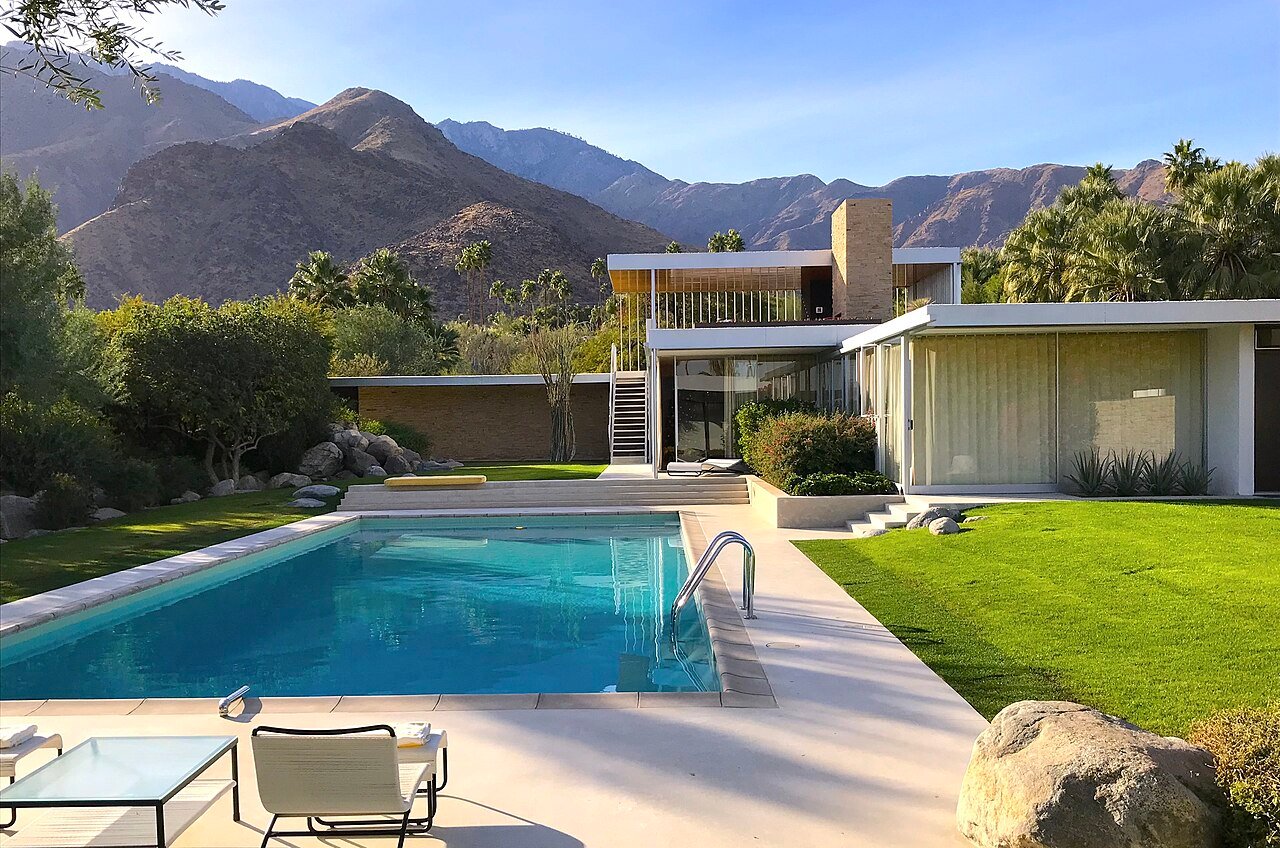
Palm Springs has a highly recognizable housing identity. Mid-century modern homes, post-and-beam construction, low rooflines, glass walls, pools, and indoor-outdoor living are a major part of the city's appeal.
That identity can create a premium even when the home is not especially large. Buyers may be paying for the neighborhood, the design, the mountain backdrop, the history, and the ability to live close to restaurants, hotels, coffee shops, and downtown activity.
Los Compadres, the neighborhood highlighted in Tommy's example, is in South Palm Springs and offers a combination of residential streets, sidewalks, underground utilities in portions of the neighborhood, and access to nearby South Palm Springs businesses and amenities.
Buyers attracted to classic desert architecture should review Palm Springs Mid-Century Styles: A Buyer's Guide before assuming that every visually appealing renovation preserved the home's most valuable design elements.

Photo by Farragutful, CC BY-SA 4.0, via Wikimedia Commons.
Palm Desert has a broader housing mix. Buyers can compare non-gated neighborhoods, country-club properties, attached homes, newer planned communities, larger suburban floor plans, and homes near the Santa Rosa Mountains.
In the video's South Palm Desert example, the similar budget purchased substantially more interior space than the Palm Springs property. That additional room may translate into a larger kitchen, more storage, a dedicated office, an extra bathroom, or more separation between bedrooms and entertaining areas.
Palm Desert's official city description calls it the cultural and retail center of the desert communities. For many buyers, the value is not only the house itself but also access to El Paseo, Highway 111 services, golf, recreation, and a central position in the valley.
The complete Palm Desert city guide explains how the housing experience changes from North Palm Desert to the central city and the neighborhoods closer to the mountains.
Citywide averages can be misleading because both cities contain multiple submarkets. North Palm Springs, central Palm Springs, and South Palm Springs can produce very different pricing and lifestyle results. The same is true when comparing North Palm Desert, country-club areas along Country Club Drive, central neighborhoods, and South Palm Desert.
Tommy intentionally compared desirable southern locations in both cities. That matters. Comparing a premium South Palm Springs neighborhood with a newer home near Interstate 10 would tell you more about submarket differences than the cities as a whole.
For each property, compare:
For a wider look at how location changes the desert experience, read 5 Reasons People Are Moving to the Palm Springs Area.
Start by getting your FREE Palm Springs Area Relocation Guide: download the Palm Springs Area Relocation Guide.
A larger home can offer obvious benefits, but size should not be separated from condition and usability.
A 2,300-square-foot property with an awkward layout, aging systems, deferred maintenance, or expensive exterior obligations may not serve you as well as a smaller home with a strong floor plan and the right location. Likewise, a beautifully staged Palm Springs renovation may still require careful inspection of the roof, HVAC, plumbing, electrical system, windows, pool equipment, drainage, and permit history.
Architecture can also influence long-term ownership. Original mid-century features may add character and value, but specialized materials and historic considerations can affect renovation plans. In Palm Desert, buyers may encounter everything from custom South Palm Desert homes to country-club residences and newer construction.
If Palm Desert's community variety is part of the appeal, compare Palm Desert country clubs and non-gated neighborhoods before deciding that the lowest price per square foot is automatically the strongest fit.

Photo by Visitor7, CC BY-SA 3.0, via Wikimedia Commons.
Two homes listed at the same price can have very different monthly and annual carrying costs.
In Palm Springs, buyers should confirm whether the property sits on fee-simple or leasehold land. A lower purchase price on lease land may come with an ongoing land payment, lease terms, lender requirements, and resale considerations.
In Palm Desert, a property may have HOA dues, a golf or social membership, a master association plus a sub-association, or special taxes tied to a newer community. Review what Palm Desert HOA fees cover before comparing a gated home with a non-gated property.
Also budget for insurance, property taxes, utilities, landscaping, pool service, home-watch services, and renovation reserves. If rental income is part of your plan, verify the current city and HOA rules rather than relying on a listing description. The guide to Palm Springs vacation-rental rules explains why eligibility must be checked at the property and neighborhood level.
Before deciding that one city provides more value, compare the homes using the same criteria.
You can browse Palm Springs homes for sale and compare Palm Desert homes for sale, but current listings are only the starting point. The most useful comparison comes from matching similar neighborhoods, property types, condition, and ownership structures.
A seven-figure budget can work in both Palm Springs and Palm Desert, but the experience of spending it may be very different.
Palm Springs often rewards buyers who value architecture, recognizable neighborhoods, downtown energy, and a strong sense of place—even when that means accepting a smaller footprint.
Palm Desert often appeals to buyers who want more interior space, broader housing choices, easier access to golf and shopping, or a larger home near the mountains.
The better value is not automatically the property with the lowest price per square foot. It is the home that gives you the right combination of location, condition, design, ownership costs, and daily lifestyle.
Buyers comparing other premium desert cities may also find the guides to buying in Rancho Mirage and retiring in La Quinta useful.
Yes, inventory can include detached homes near that price in both cities, but availability, size, condition, neighborhood, and land or HOA structure change constantly. Confirm current listings and recent comparable sales before treating $1 million as a fixed threshold.
Palm Desert often offers more square footage at a similar price, especially when compared with premium Palm Springs neighborhoods. That is a general pattern rather than a rule, and individual homes can differ substantially.
No. The result depends on the exact neighborhood, property type, land status, condition, architecture, lot, and amenities. A luxury Palm Desert property can cost far more than a modest Palm Springs home.
Buyers may be paying for a premium neighborhood, architectural character, proximity to downtown, mountain views, historic significance, or the Palm Springs lifestyle brand—not only the number of square feet.
Yes. Palm Desert includes mid-century properties and architecturally significant homes, particularly in established central and southern areas, although Palm Springs has the stronger citywide association with Desert Modern design.
Compare land-lease payments, HOA and club dues, special taxes, insurance, utilities, pool and landscape maintenance, renovation needs, property management, and potential assessments or transfer fees.
Tommy Jordan is a California real estate agent (CA DRE #01887038) and leads The Tommy Jordan Group at eXp Realty (CA DRE #02187306). He helps buyers and sellers throughout Palm Springs, Palm Desert, Rancho Mirage, La Quinta, Indian Wells, and the greater Coachella Valley, and is known for honest local guidance and practical relocation advice. Learn more about Tommy Jordan or watch the Tommy Jordan | Palm Springs Area Living YouTube channel.

If you're thinking about moving to the Palm Springs area, our team is here to help make the process simple and stress free.
We've helped hundreds of buyers relocate to the Palm Springs area, and we'd love to help you find the right home and community for your lifestyle.
Start by getting your FREE Palm Springs Area Relocation Guide:
https://tommyjordanre.com/relocation-guide
Have questions or ready to start your home search?
Call or Text: (760) 469-9182
Email: [email protected]
Whether you're moving next month or just starting your research, we're here to help every step of the way.
Palm Springs
How summer heat, winter seasonality, home maintenance, carrying costs, community rhythm, and California residency questions change when the desert is your primary home… Read more
Construction is underway near Highway 111, but sales have not opened yet. Here is what Shea Homes has published so far about pricing, home sizes, architecture, ameniti… Read more
Palm Springs
What buyers should know about everyday driving, I-10 vs. Highway 111, seasonal congestion, event traffic, weather closures, transit, and testing real routes before cho… Read more
With ten years of experience as a licensed agent, Tommy is an innovator in utilizing social media marketing to help sell homes. He has a successful YouTube channel with thousands of subscribers, generating hundreds of thousands of views yearly. He stays updated on the latest marketing techniques and ensures each property stands out.
Contact Tommy to Learn More
74801 Hovley Ln E. Palm Desert, CA 92260 Tommy Jordan | CA DRE# 01887038