FIRPTA and Selling a Palm Springs Area Home as a Canadian Owner
Palm Springs Tommy Jordan August 14, 2026
Palm Springs Tommy Jordan August 14, 2026
If you own a home in the Palm Springs area and live in Canada, the tax side of selling can affect your closing proceeds long before you file a tax return.
The federal issue most Canadian sellers hear about is FIRPTA. The important point is that FIRPTA withholding is usually a prepayment toward U.S. tax, not a calculation of your final tax bill.
California also has a separate real estate withholding process. Both should be reviewed early so you know what may be withheld at closing, what paperwork is needed, and what may later be claimed as a credit.
If you are treated as a foreign person for U.S. tax purposes, a sale of U.S. real property is generally subject to FIRPTA withholding. The general federal withholding rate is 15% of the amount realized, although qualifying buyer-residence transactions can reduce the rate to 10% or eliminate withholding at lower price levels.
That does not mean you automatically owe 15% of the sale price in tax. You later report the sale on the applicable U.S. tax return and claim the FIRPTA withholding as a credit. If too much was withheld, a refund may be available.
California has its own Form 593 real estate withholding rules, separate from FIRPTA. If you are still a Canadian tax resident, the sale may also have Canadian reporting consequences and a foreign tax credit may be available for qualifying U.S. tax paid.
This guide is general information, not tax or legal advice. Cross-border ownership, residency, entity structure, rental history, and prior tax elections can change the result. Have a qualified U.S.-Canada tax professional review your situation before closing.
FIRPTA stands for the Foreign Investment in Real Property Tax Act. It applies when a foreign person disposes of a U.S. real property interest.
For many Canadian owners who are nonresident aliens for U.S. tax purposes, that means FIRPTA applies when they sell a Palm Springs area home. Canadian citizenship by itself is not the test. A Canadian citizen who is treated as a U.S. person for tax purposes can have a different result.
Before you assume FIRPTA applies, or assume it does not, confirm your U.S. tax status and the way title is held with a cross-border tax professional.
For a typical sale by a foreign individual, the general FIRPTA withholding rate is 15% of the amount realized. In a straightforward cash sale, the contract price may be close to that number, but the federal definition can also include other property transferred and liabilities assumed by the buyer.
For qualifying transactions where the buyer acquires the property for use as a residence, the main federal thresholds are:
The residence exception has its own use requirements, so do not assume a reduced rate simply because the property is a house or condo. The buyer's intended use matters.
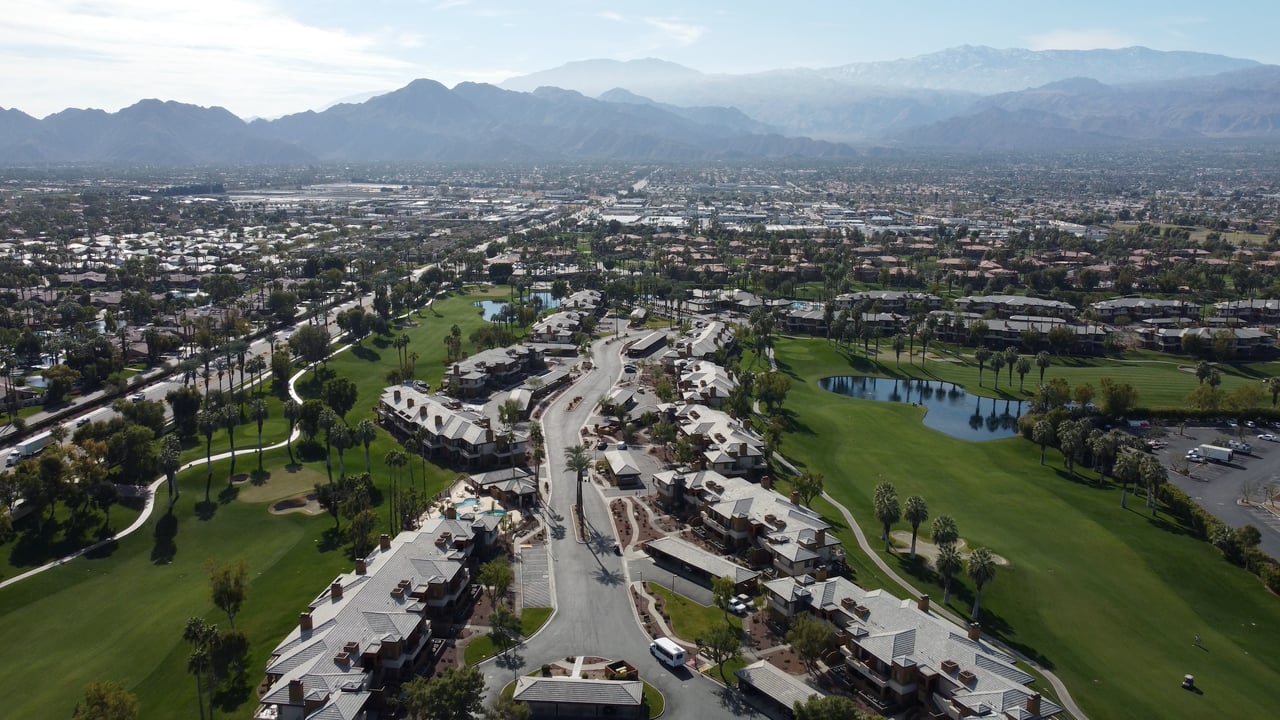
Palm Springs, California. FIRPTA is a federal rule, so the same federal framework can apply throughout the Palm Springs area when a foreign person sells U.S. real property. Photo by Caroline Ross on Unsplash.
This is the part that creates the most confusion.
FIRPTA withholding is collected during the transaction so money is on account for the seller's potential U.S. tax. It is not a flat capital-gains tax rate.
The buyer is generally the federal withholding agent and reports the withholding on Forms 8288 and 8288-A. The seller then files the applicable U.S. income tax return, reports the sale, and claims the amount withheld as a credit. For an individual nonresident alien, that commonly means Form 1040-NR.
If the final U.S. tax is less than the amount withheld, the difference may be refundable. If the final tax is higher, additional tax may be due.
If 15% of the amount realized would be much higher than the expected U.S. tax on the sale, a seller can ask the IRS for a reduced withholding certificate, commonly using Form 8288-B.
Timing matters. A withholding-certificate application can be submitted before or on the date of transfer, and the IRS normally acts within 90 days after receiving a complete application. If the application is still pending at closing, the required amount is generally still withheld, but remittance can be delayed until the certificate decision is issued.
This is why FIRPTA planning should start well before the closing table. A cross-border tax professional can tell you whether a withholding-certificate application makes sense for your expected gain and timeline.
Federal FIRPTA is only one layer. California also has real estate withholding rules for sales of California property.
For a conventional sale when no exemption applies, California Form 593 allows either the standard 3 1/3% sales-price method or an alternative withholding calculation based on estimated gain and the applicable tax rate. California also provides full and partial exemptions in qualifying situations.
The real estate escrow person is involved in the California process, and the seller must provide Form 593 before closing when claiming an exemption or making the applicable withholding election. Any California amount withheld is claimed through the seller's California tax return.
That means a Canadian seller can have a federal FIRPTA issue and a California withholding issue in the same transaction. They are separate systems and should be reviewed separately.
Selling a home in the Palm Springs area from Canada? The Tommy Jordan Group can help with pricing, marketing, offers, and escrow coordination while your cross-border tax professional handles the tax analysis. Review the Palm Springs area home-selling process or contact The Tommy Jordan Group when you are ready to plan the sale.
The cleaner your records are, the easier it is for your tax adviser to estimate the gain, evaluate a withholding certificate, and prepare the U.S., California, and Canadian filings that may apply.
Depending on your situation, your adviser may ask for:
The federal FIRPTA reporting forms require taxpayer identification numbers. If you need an ITIN, address that early rather than discovering the issue after closing.
If the property has been used as a short-term rental, keep the rental and depreciation records your tax professional needs and separately confirm what happens to any local permit when ownership changes. For a Palm Springs property, the Palm Springs vacation rental rules guide covers the city-side permit framework.
Cathedral City is part of the greater Palm Springs area. The federal FIRPTA rules do not change simply because the property is in a different local desert city. Photo by Steve Gribble on Unsplash.
Confirm whether you are a foreign person for U.S. tax purposes, identify the ownership structure, and have a cross-border tax professional estimate the likely U.S. tax and withholding impact.
Make sure the escrow or closing team knows the seller is foreign for U.S. tax purposes when that is the case. Do not assume the buyer-residence exception applies until the transaction actually qualifies for it.
Decide whether a Form 8288-B withholding-certificate application is appropriate. Complete the required California Form 593 work. Confirm the taxpayer identification information that will be used on the federal forms.
Keep the FIRPTA documentation, including the seller's Form 8288-A information. The buyer generally files and pays the FIRPTA withholding by the 20th day after the disposition unless the pending-certificate rules change the remittance timing. The seller then uses the IRS documentation to claim the withholding credit on the applicable U.S. return.
California withholding is also claimed on the appropriate California return. If you remain a Canadian tax resident, coordinate the U.S. and Canadian filings so your adviser can determine whether a Canadian foreign tax credit is available.
For a plain-English look at how the closing side works, read the Palm Desert escrow guide. It is written for buyers, but the explanation of escrow's role, documents, funds, and closing coordination is useful for remote sellers too.
FIRPTA should be part of your sale planning, but it should not be a closing-day surprise.
The main questions are straightforward: Are you a foreign person for U.S. tax purposes? What withholding rate applies to this buyer and price? Would a withholding certificate help? What California withholding applies? And how will the sale be reported in the U.S. and Canada?
Answer those early and the real estate side of the sale becomes much easier to coordinate.
If the property is on leased land, review the ground lease, title documents, transfer requirements, and any separate fees early in the sale. The Palm Springs lease-land versus fee-simple guide explains the ownership structure in more detail.
No. Fifteen percent is the general rate, but qualifying buyer-residence transactions can have zero withholding at $300,000 or less or a 10% rate when the amount realized is more than $300,000 and no more than $1 million. Other exceptions and withholding certificates can also change the amount.
Yes. A 10% rate can apply to a qualifying buyer-residence transaction when the amount realized is more than $300,000 and no more than $1 million. Above $1 million, the withholding rate is generally 15%.
Potentially. The seller files the applicable U.S. tax return, reports the sale, and claims the amount withheld as a credit. If the withholding is more than the actual U.S. tax due, the excess may be refunded.
The federal FIRPTA forms require taxpayer identification numbers for the seller and buyer. A foreign individual who is not eligible for an SSN may need an ITIN. Confirm your identification requirements early with your tax professional.
California has its own real estate withholding system using Form 593. When no exemption applies, the standard sales-price method is 3 1/3%, or the seller may qualify to use an alternative calculation based on estimated gain and the applicable tax rate.
If you remain a Canadian tax resident, Canadian reporting can apply to a U.S. real estate sale. A foreign tax credit may also be available for qualifying U.S. tax paid. Have a cross-border tax professional coordinate both returns because the calculations and timing can differ.
Tommy Jordan is a California real estate agent (CA DRE #01887038) and leads The Tommy Jordan Group at eXp Realty (CA DRE #02187306). He helps buyers and sellers throughout La Quinta, Palm Desert, Palm Springs, Rancho Mirage, Indian Wells, and the greater Coachella Valley, and is known for honest local guidance and practical relocation advice. Learn more about Tommy Jordan or watch the Tommy Jordan | Palm Springs Area Living YouTube channel.

If you're selling a Palm Springs area property or planning another desert move, The Tommy Jordan Group can help with the real estate side of the process.
For cross-border tax questions, work with a qualified U.S.-Canada tax professional. For local pricing, marketing, offers, and escrow coordination, we're here to help.
Moving to or within the desert? Get the FREE Palm Springs Area Relocation Guide.
Call or Text: (760) 469-9182
Email: [email protected]
Palm Springs
How summer heat, winter seasonality, home maintenance, carrying costs, community rhythm, and California residency questions change when the desert is your primary home… Read more
Construction is underway near Highway 111, but sales have not opened yet. Here is what Shea Homes has published so far about pricing, home sizes, architecture, ameniti… Read more
Palm Springs
What buyers should know about everyday driving, I-10 vs. Highway 111, seasonal congestion, event traffic, weather closures, transit, and testing real routes before cho… Read more
With ten years of experience as a licensed agent, Tommy is an innovator in utilizing social media marketing to help sell homes. He has a successful YouTube channel with thousands of subscribers, generating hundreds of thousands of views yearly. He stays updated on the latest marketing techniques and ensures each property stands out.
Contact Tommy to Learn More

74801 Hovley Ln E. Palm Desert, CA 92260 Tommy Jordan | CA DRE# 01887038

