Lease Land vs. Fee-Simple Land in the Palm Springs Area
Palm Springs Tommy Jordan August 10, 2026
Palm Springs Tommy Jordan August 10, 2026
Lease land is one of the most misunderstood parts of buying a home in the Palm Springs area.
Two homes can sit close to each other, look similar, and even share the same architectural style while having very different land-ownership structures. One buyer may receive fee title to the land beneath the home. Another may purchase a leasehold interest that provides the right to use the land for a defined period under a ground lease.
Neither structure is automatically good or bad. The decision depends on the purchase price, remaining lease term, ground-rent formula, financing, resale plans, HOA obligations, property condition, and the exact language in the recorded documents.
This guide explains lease land versus fee-simple ownership in practical terms and identifies the questions Palm Springs area buyers should answer before removing contingencies.
Fee-simple ownership generally means the buyer owns both the land and the improvements, subject to normal liens, easements, restrictions, and association documents. A leasehold purchase gives the buyer contractual rights to use the land for a stated term, while the lease controls rent, transfers, financing, renewal options, and what happens to improvements when the term ends. Fee simple is often simpler for long-term ownership and resale. Lease land can still be a strong fit when the remaining term is long, the documents are clear, financing is available, and the total cost provides access to a home or location the buyer values.
This article combines Tommy Jordan's local buyer guidance with current information from the City of Palm Springs, the Agua Caliente land-status framework, the Bureau of Indian Affairs, Fannie Mae, and Freddie Mac. Every lease is different, so the preliminary title report, recorded ground lease, amendments, lender approval, and qualified legal and tax advice should control the final decision.
In a typical fee-simple purchase, the buyer receives ownership of the land and the home, subject to the deed, title exceptions, easements, taxes, financing, HOA documents, and other recorded restrictions.
In a leasehold transaction, the buyer acquires rights created by a lease. The land remains owned by another party, and the buyer pays ground rent or participates through a master-lease and sublease structure.
It is tempting to summarize lease land as “you own the house but rent the land.” That can be directionally helpful, but it is not precise enough for due diligence. The lease must identify who owns the permanent improvements and whether those improvements remain, are removed, transfer, or are handled another way when the lease terminates.
That means the actual documents—not a listing description—determine:
For a broader overview of the transaction and investigation period, read how escrow and buyer contingencies work.
The City of Palm Springs explains that a series of checkerboard square miles runs through the city within the historical reservation boundaries. The City identifies three broad land-status categories: Tribal Trust land, land allotted to a Tribal member, and fee land.
Those categories should not be treated as a substitute for a title report. Allotted land may be leased or not leased, and fee land can be privately owned and still be subject to a private ground lease. The Bureau of Indian Affairs also notes that residential leasing is not exclusive to Indian trust land.
The practical lesson is simple: city, neighborhood, and street names do not prove the ownership structure. A buyer must verify the exact parcel.
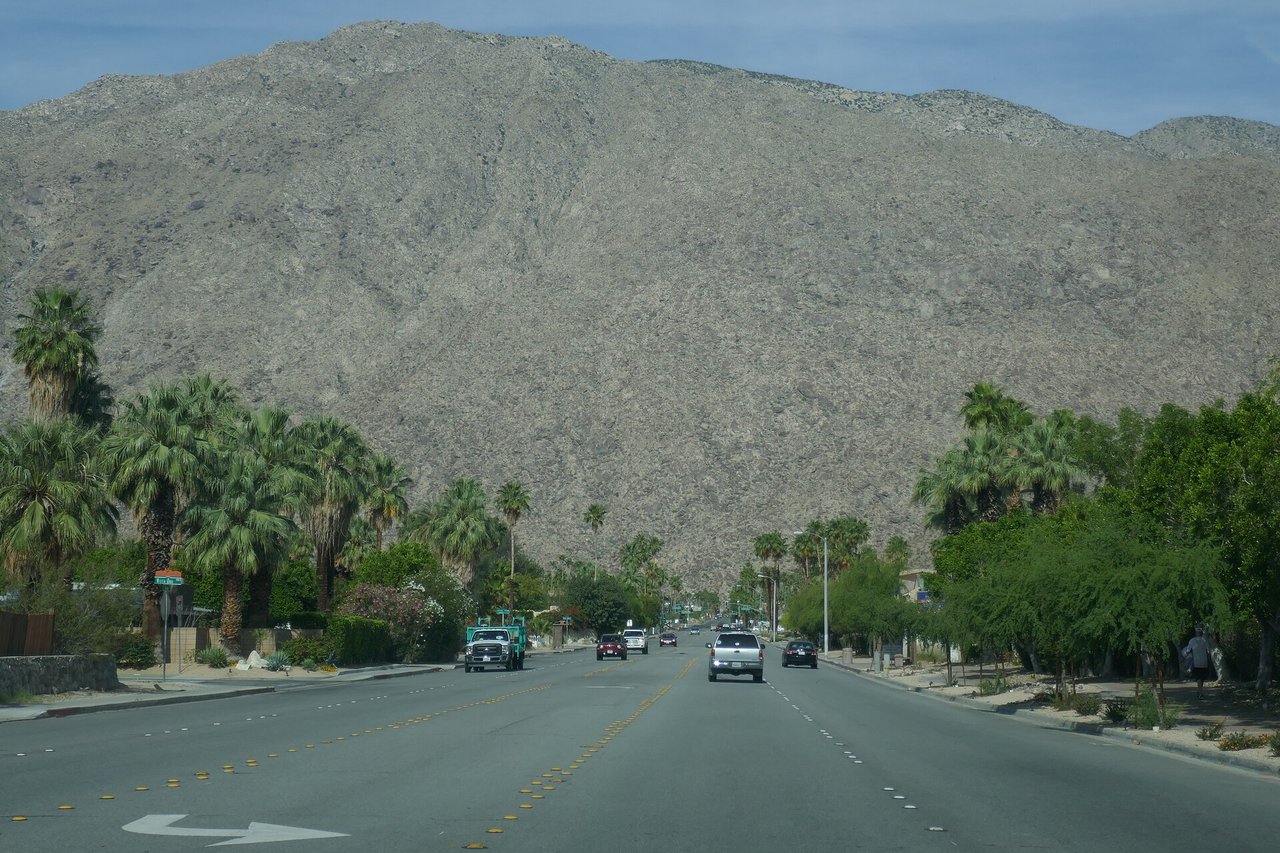
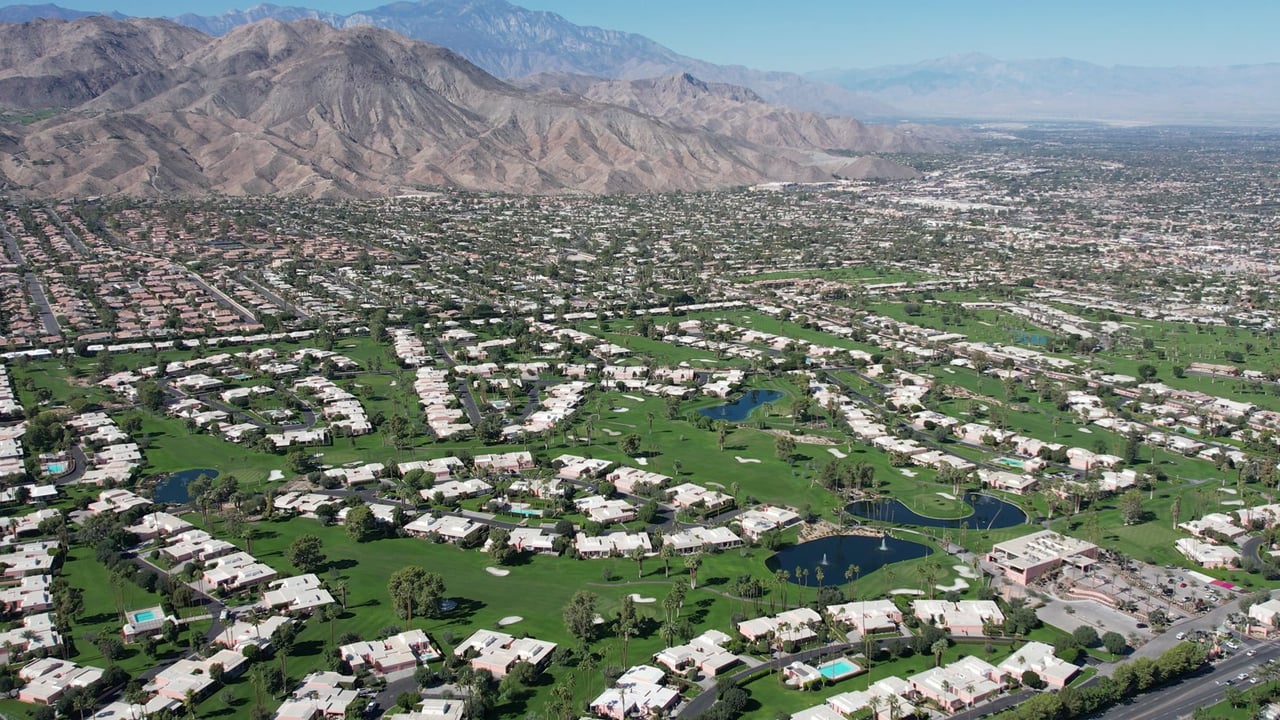
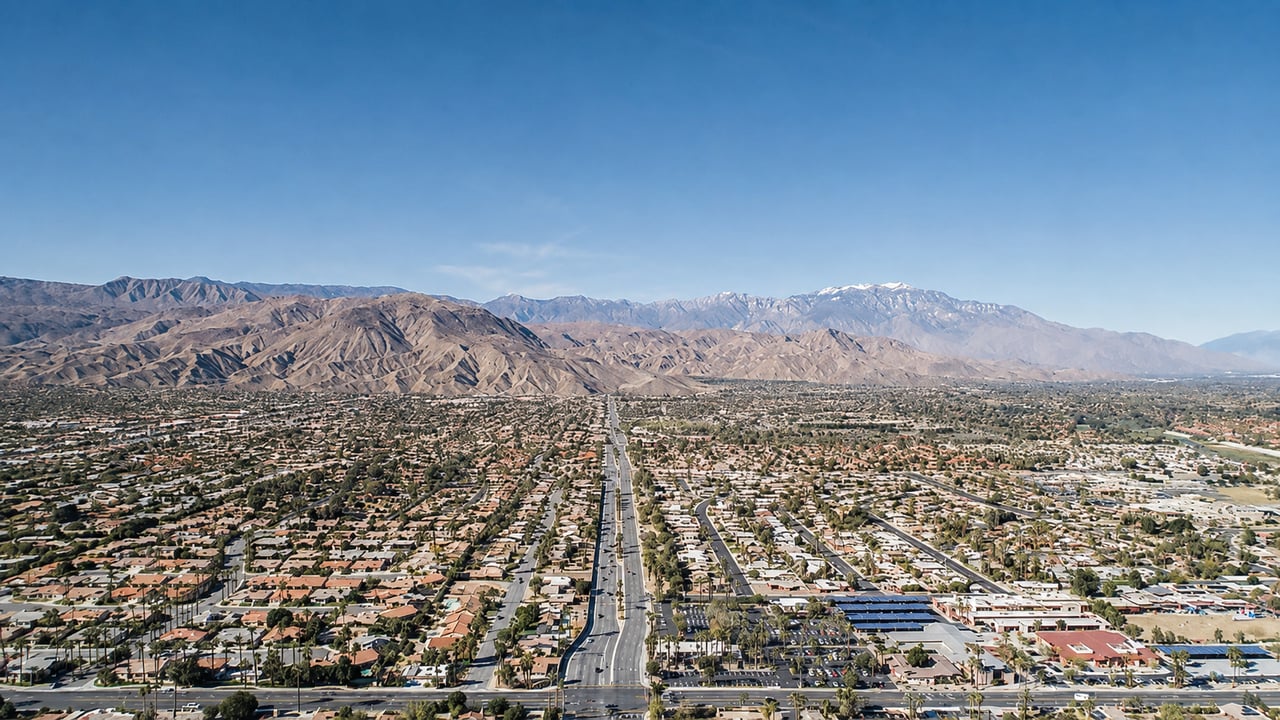
Leasehold properties are encountered most often in Palm Springs, portions of Rancho Mirage, Cathedral City, and nearby reservation areas. Fee-simple and leasehold homes can exist surprisingly close to one another because of the historical checkerboard pattern.
Buyers comparing different parts of the valley may find the guides to Palm Springs versus Palm Desert and buying in Rancho Mirage useful.

Photo by Justin.skoda, CC BY-SA 3.0, via Wikimedia Commons.
The expiration year is one of the first items buyers and lenders review, but there is no single number that applies to every loan.
Fannie Mae's current leasehold requirements state that the unexpired lease term must extend at least five years beyond the mortgage maturity date. A 30-year mortgage following that guideline therefore needs at least 35 years remaining when measured under the lender's requirements.
That is a lending guideline—not a universal promise that every property with 35 years remaining will qualify. The lease language, property type, appraisal, market acceptance, lender overlays, BIA or Tribal approvals, HOA structure, and loan program can all affect eligibility.
The Bureau of Indian Affairs states that a leasehold mortgage on trust or restricted land cannot run longer than the ground lease. BIA approval may also be required for a leasehold mortgage under its jurisdiction.
A cash buyer should review the same issue. Paying cash may remove one financing obstacle at purchase, but the future buyer may need a mortgage. A shorter remaining term can therefore affect resale timing, buyer demand, and negotiating leverage.
A buyer should never evaluate a lease using only the current monthly or annual payment.
Review the complete rent schedule and identify:
Two homes in the same general area can have different ground rents because they may be governed by different leases, amendments, allocation formulas, or parcel characteristics.
The correct comparison is not simply purchase price versus purchase price. Compare the full annual cost of ownership, including the mortgage, ground rent, property taxes, insurance, HOA dues, club charges, utilities, maintenance, and capital reserves.
Start by getting your FREE Palm Springs Area Relocation Guide: download the Palm Springs Area Relocation Guide.
Leasehold homes may sometimes sell for less than similar fee-simple properties because the buyer is not receiving fee title to the underlying land and is accepting an ongoing rent obligation.
That price difference is not a guaranteed percentage. It changes with the neighborhood, lease term, ground rent, home condition, architecture, view, HOA, market conditions, and the quality of comparable sales.
A leasehold purchase may make sense when it provides:
Fee simple may make more sense when the buyer prioritizes land ownership, simpler financing, a broader future buyer pool, estate planning, or a very long holding period.
Buyers focused on architecture should also review the Palm Springs mid-century home styles guide. Second-home buyers may find the desert second-home decision guide helpful.
A lender and appraiser do not evaluate a leasehold property exactly like a standard fee-simple home.
Fannie Mae requires the appraisal to address the leasehold interest and the relevant lease terms. The appraiser must evaluate market acceptance and select appropriate comparable sales.
For a buyer, that means an attractive list price should be tested against leasehold comparables whenever possible. A nearby fee-simple sale may not provide a clean one-to-one comparison because the property rights and recurring costs are different.
Ask the lender and appraiser to consider:

Photo by Wgreaves, CC BY-SA 4.0, via Wikimedia Commons.
Some Palm Springs area leases have been extended, and the BIA Palm Springs Agency states that leases on the Agua Caliente Indian Reservation may be negotiated for terms up to 99 years.
That history does not create an automatic renewal right for every buyer.
A residential lease should state whether an option to renew exists and, when it does, the term, conditions, and process for exercising it. If the documents do not provide a buyer-controlled option, future extension may depend on negotiations, approvals, and agreement among the required parties.
Do not rely on verbal statements such as “these always get renewed.” Ask for the recorded lease, every amendment, current extension documents, owner communications, and written status of any pending negotiations.
There is no safe valley-wide answer to the question, “Who gets the house when the lease expires?”
Federal residential-leasing guidance requires a lease involving permanent improvements to identify who owns those improvements and whether they remain, are removed, transfer, or are disposed of another way at termination.
The correct answer therefore comes from the specific lease and its amendments.
Before buying, have qualified professionals explain:
This is one of the reasons a leasehold purchase should not be reduced to a short online definition.
A leasehold condominium or gated home may involve both ground rent and HOA dues. A country-club community may add club costs as well.
Each payment serves a different purpose:
Do not combine these into one vague “monthly fee.” Review each obligation independently, determine what it covers, and model future increases.
Buyers comparing club-oriented properties can use the guide to country clubs versus non-gated neighborhoods for additional ownership questions.
A buyer on lease land should not assume that the ground-rent payment replaces property taxes or other ownership expenses.
Tax treatment can depend on the ownership and lease structure, the remaining term, the improvements, and how the interest is assessed. Review the actual tax bill and obtain guidance from the title and escrow team, county assessor, and tax adviser rather than using a general online estimate.
The buyer may also remain responsible for homeowners insurance, HOA assessments, repairs, roof or exterior obligations, pool and landscape care, utilities, and home-watch services.
For seasonal owners, a lower acquisition price can be attractive, but only when the complete annual carrying cost fits the plan.
Do not wait until the final days of escrow to ask whether a lender can finance the lease or whether the expiration date creates a resale concern.
Before making an offer:
Buyers who are still comparing cities can review the complete guides to Palm Desert, Indian Wells, and retiring in La Quinta.
Fee simple may be the stronger fit when you:
Leasehold may be worth considering when you:
Lease land should not be dismissed automatically, and it should never be purchased casually.
The strongest leasehold purchases are the ones where the buyer understands the documents, confirms financing before the offer, calculates future rent and resale exposure, and values the property enough to accept the trade-offs.
Fee-simple ownership is generally easier to explain and may offer more long-term control. Leasehold ownership can provide access to desirable Palm Springs homes and locations at a different acquisition cost.
The right answer depends on the exact parcel and lease—not a citywide rule or a number copied from another listing.
No. Palm Springs includes fee land, Tribal Trust land, allotted land, and properties subject to different lease arrangements. Verify the exact parcel through the preliminary title report and recorded documents.
The buyer acquires the rights stated in the lease and transfer documents. Many transactions involve ownership or a leasehold interest in the improvements, but the lease must specify ownership and what happens to permanent improvements at termination.
Yes, some leasehold properties qualify for financing. Eligibility depends on the remaining term, lease provisions, appraisal, property type, market acceptance, lender requirements, and any required BIA, Tribal, landowner, or HOA approvals.
There is no universal number for every loan. Fannie Mae currently requires the unexpired term to extend at least five years beyond loan maturity, but other programs and lenders may apply different or additional requirements.
No automatic renewal should be assumed. Review the lease for a written renewal option, conditions, required approvals, and the status of any extension negotiations.
The answer depends on the lease. Federal guidance requires leases involving permanent improvements to address ownership and disposition. A qualified attorney should explain the exact termination provisions.
No. Ground rent pays for use of the land. HOA dues fund association operations and shared obligations. A property may require both, and a country club may add separate charges.
It can have a lower purchase price than a comparable fee-simple property, but there is no reliable universal discount. Compare current sales, ground rent, future increases, financing, taxes, HOA costs, and resale exposure.
Yes. Fee land can be privately owned and leased to homeowners. The presence of a residential ground lease does not automatically mean the parcel is Tribal Trust land or under BIA jurisdiction.
This article is for general educational purposes and is not legal, tax, title, appraisal, or lending advice. Lease provisions and financing requirements vary. Review the specific property documents with qualified professionals before purchasing.
Tommy Jordan is a California real estate agent (CA DRE #01887038) and leads The Tommy Jordan Group at eXp Realty (CA DRE #02187306). He helps buyers and sellers throughout Palm Springs, Palm Desert, Rancho Mirage, Indian Wells, La Quinta, and the greater Coachella Valley, and is known for honest local guidance and practical relocation advice. Learn more about Tommy Jordan or watch the Tommy Jordan | Palm Springs Area Living YouTube channel.

If you're thinking about moving to the Palm Springs area, our team is here to help make the process simple and stress free.
We've helped hundreds of buyers relocate to the Palm Springs area, and we'd love to help you find the right home and community for your lifestyle.
Start by getting your FREE Palm Springs Area Relocation Guide:
https://tommyjordanre.com/relocation-guide
Have questions or ready to start your home search?
Call or Text: (760) 469-9182
Email: [email protected]
Whether you're moving next month or just starting your research, we're here to help every step of the way.
Palm Springs
How summer heat, winter seasonality, home maintenance, carrying costs, community rhythm, and California residency questions change when the desert is your primary home… Read more
Construction is underway near Highway 111, but sales have not opened yet. Here is what Shea Homes has published so far about pricing, home sizes, architecture, ameniti… Read more
Palm Springs
What buyers should know about everyday driving, I-10 vs. Highway 111, seasonal congestion, event traffic, weather closures, transit, and testing real routes before cho… Read more
With ten years of experience as a licensed agent, Tommy is an innovator in utilizing social media marketing to help sell homes. He has a successful YouTube channel with thousands of subscribers, generating hundreds of thousands of views yearly. He stays updated on the latest marketing techniques and ensures each property stands out.
Contact Tommy to Learn More

74801 Hovley Ln E. Palm Desert, CA 92260 Tommy Jordan | CA DRE# 01887038