Is Traffic Bad in the Palm Springs Area? A Local Guide to Getting Around
Palm Springs Tommy Jordan August 25, 2026
Palm Springs Tommy Jordan August 25, 2026
Traffic in the Palm Springs area is one of those topics where both extremes are misleading. The valley is not traffic-free, but many people moving from Los Angeles, Orange County, San Diego, or another major metro notice that everyday driving can feel much easier.
The important part is understanding when that changes. Winter visitors, major events, construction, wind, flooding, and the exact location of your home can all affect how long a trip takes.
That means the better question is not simply, “Does Palm Springs have traffic?” It is whether the routes you will actually use fit the way you plan to live.
Most everyday driving in the Palm Springs area is manageable, but traffic is not nonexistent. Interstate 10 is useful for longer east-west trips, while Highway 111 connects many of the valley’s developed city centers and commercial areas. Winter high season, major events, road work, and weather-related closures can create delays. The exact address matters, especially if you expect to commute across the valley or live near roads that can be affected by wind and wash conditions.
Current 2020–2024 estimates put mean travel time to work at 22.2 minutes in Palm Springs, 21.0 minutes in Palm Desert, and 25.6 minutes in La Quinta. Those figures only measure work commutes, but they are useful context for buyers coming from larger Southern California markets.
For the broader relocation picture, read 5 Reasons Buyers Are Moving to the Palm Springs Area. This guide focuses only on traffic, routes, and day-to-day mobility.
Daily driving here can feel very different from coastal Southern California. The lifestyle difference is not that every road is empty; it is that many routine trips can stay local instead of turning into long freeway drives.
“Living out here, you don’t spend your life in the car.” — Tommy Jordan
That is a useful way to frame the lifestyle difference, but it should not be interpreted literally as “no traffic.” The valley has rush periods, school traffic, construction, visitor traffic, and event weekends just like any other region.
The practical advantage is that many daily trips can stay within one city or a nearby group of cities. If your home, groceries, healthcare, restaurants, recreation, and work are all concentrated in the same part of the valley, your routine may involve much less driving than someone who regularly crosses from Palm Springs to La Quinta or farther east.
Commute statistics support the idea that many local work trips are relatively moderate, but averages do not tell you whether a particular house fits your schedule. Test the exact route before you buy.
Two routes shape a large part of east-west driving in the Coachella Valley: Interstate 10 and Highway 111.
Interstate 10 is generally the faster choice when you are covering a longer distance and your starting point and destination both have convenient freeway access. It runs along the northern side of much of the developed valley and can be especially useful for longer cross-valley trips and travel in or out of the region.
Highway 111 takes you through more of the developed core. It connects Palm Springs, Cathedral City, Rancho Mirage, Palm Desert, Indian Wells, and the La Quinta side of the valley through the commercial and residential areas people use every day. It can be more direct for local destinations even when it is not the fastest route from one end of the valley to the other.
The best route can change by address. A home that looks centrally located on a valley map may still require several surface-street miles before you reach I-10. Another property may sit close to Highway 111 but involve more signals and local traffic.
If central access is important, compare the actual road network—not just the city name. The guides to Palm Springs versus Palm Desert and moving to Indian Wells show how different city locations can change your everyday routine.
Traffic conditions change with the season. Palm Springs measures its street network using “in season” peak-hour conditions, so a quiet summer weekday should not be treated as the year-round baseline.
Major events can create a much sharper short-term change. Palm Springs events can bring temporary closures or detours to busy corridors, and active construction can change familiar routes. If your regular drive passes through downtown or another event area, make sure you have a practical alternate.
That does not mean you should avoid a home because an event happens nearby. It means an unusually easy showing-day drive should not be the only traffic test you use before buying.
Construction is another reason not to rely on a single drive-time estimate from a listing appointment. Caltrans QuickMap provides live traffic speeds, incidents, cameras, and lane-closure information, which is more useful for a real trip than assuming every week will look the same.
The Palm Springs area is long enough that “close to everything” is not a useful buying standard. Close to what?
A buyer who spends most of the week in downtown Palm Springs has a different ideal location from someone whose routine centers on El Paseo, Eisenhower Health, Indian Wells, Old Town La Quinta, PGA West, or family on the east side of the valley.
Before deciding that a home is centrally located, test the destinations that matter to you:
Drive those routes at the times you expect to use them. If you are choosing between the west and east sides of the valley, the La Quinta area guide and Rancho Mirage buyer guide provide useful location context.
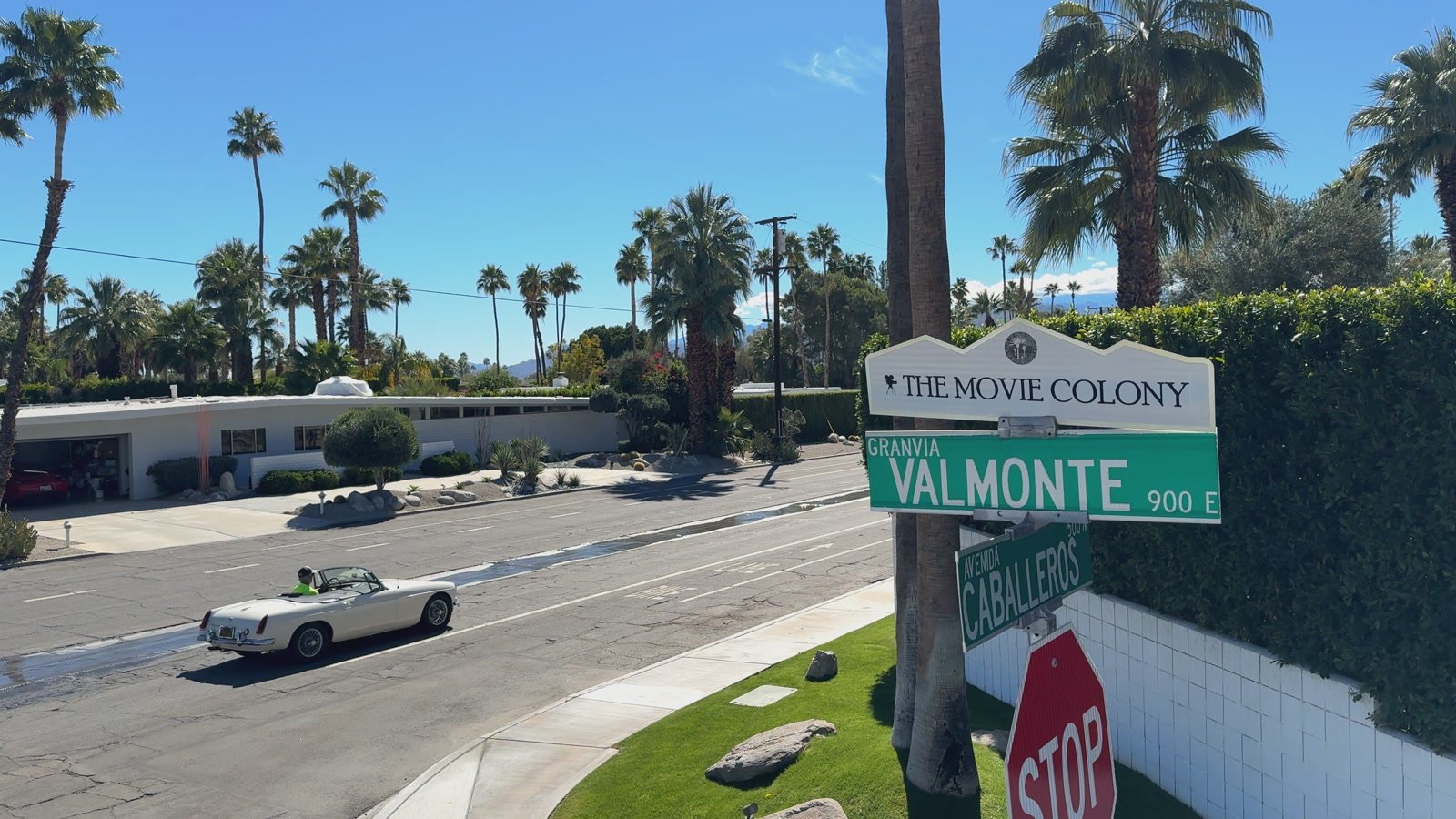
The Movie Colony and Valmonte street signs beside a Palm Springs residential road. Original 4K video frame supplied by The Tommy Jordan Group.
Still deciding where in the valley to live? Use the Palm Springs Area Relocation Guide to compare cities, communities, and the daily-life priorities that matter most to your move.
Palm Springs has an additional traffic issue that buyers should know about: some roads cross low points in local washes and can be affected by wind, blowing sand, water, or other weather conditions.
Palm Springs specifically identifies sections of Indian Canyon Drive, Gene Autry Trail, and Vista Chino as roads that are frequently affected by inclement weather and high winds. When one of those crossings closes, traffic may shift to other north-south routes.
This matters most if your home or routine depends on a specific route to Interstate 10, the north side of Palm Springs, or destinations beyond the city. A five-minute difference on a normal day may matter less than whether you have a second route when conditions change.
If you are considering north Palm Springs or another wind-exposed setting, ask yourself which alternate streets you would actually use rather than assuming your usual route will always be open.
That depends heavily on the exact address and your routine.
SunLine currently operates 10 local fixed routes and one regional route throughout the Coachella Valley. That gives residents a public-transit option, but route convenience changes by city, stop location, schedule, and destination.
Walking can also work well in selected areas. Downtown Palm Springs is more pedestrian-oriented than many residential parts of the valley, and some South Palm Desert addresses provide useful access to El Paseo. Other neighborhoods are designed around driving, gated entrances, larger blocks, or destinations spread along major corridors.
If reducing car use is important, test it from the exact front door. Walk to the coffee shop. Check the bus stop and schedule. Look at the route to groceries. Try the crossing at Highway 111. What feels close on a map may not feel practical in July, with bags in your hands, or after dark.
For a property-level example, see the guide to living in South Palm Desert, where walkability can change substantially from one street to another.
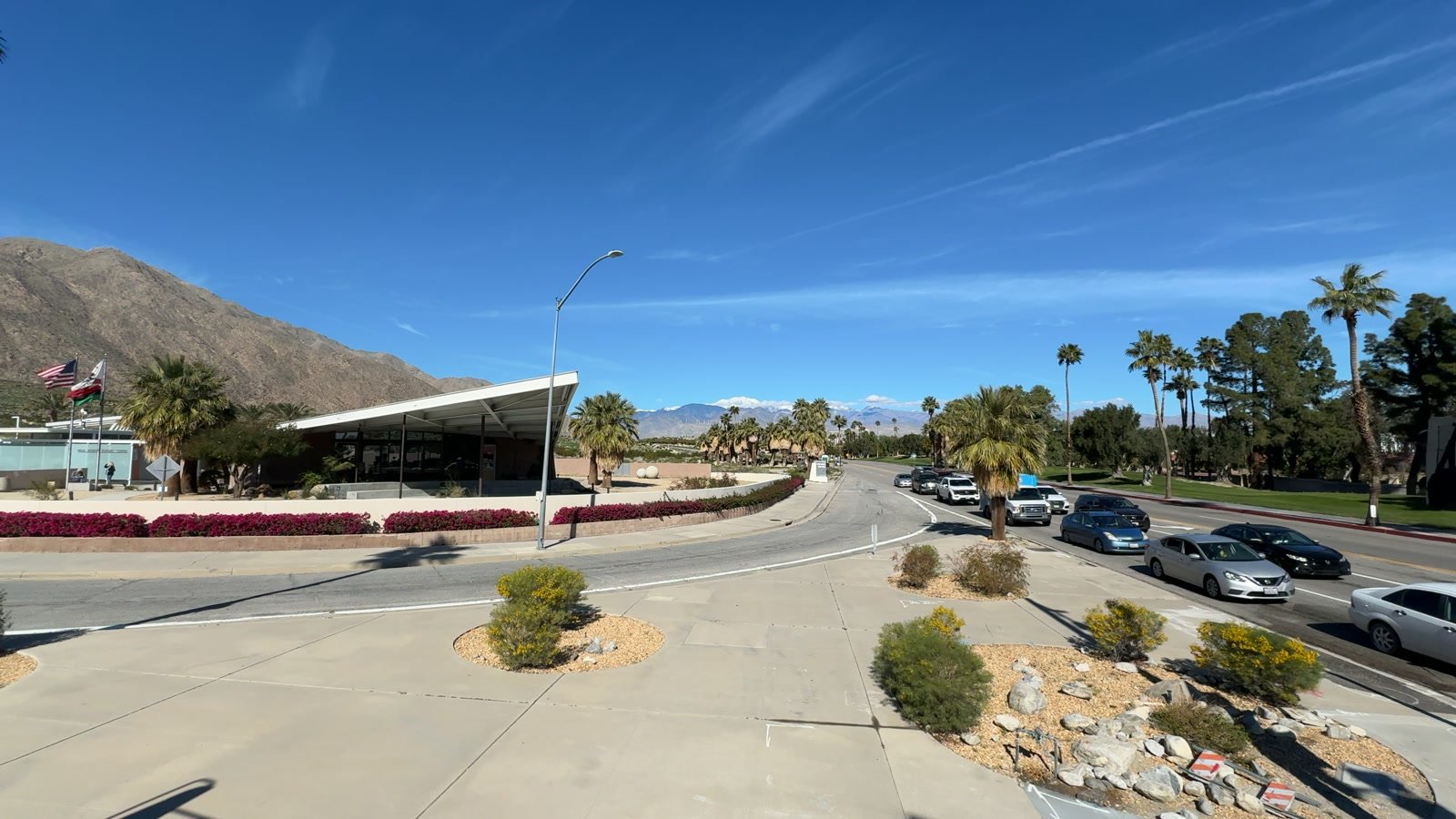
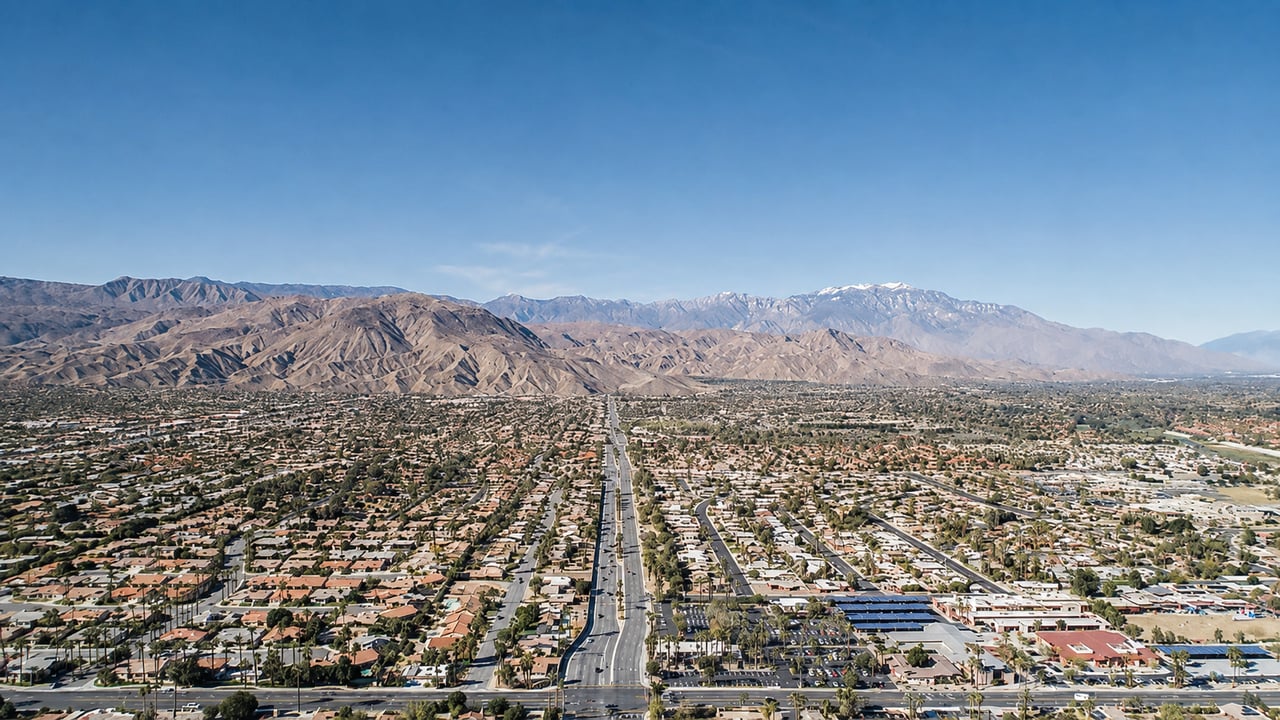
Palm Springs roadway traffic with desert mountains in the background. Original 4K video frame supplied by The Tommy Jordan Group.
Traffic conditions change too quickly for a static article to tell you the fastest route on a particular day.
For freeway and state-highway trips, Caltrans QuickMap is the practical tool to check before leaving. It can show traffic speeds, incidents, cameras, lane closures, and other current conditions.
For Palm Springs streets, use the city’s street-closure and detour page for active alerts and the wash crossings most often affected by weather. Other valley cities publish their own construction and special-event notices.
If you are buying from out of town, save those resources before your house-hunting trip. They will give you a better picture of the valley than relying on one unusually quiet Saturday morning or one unusually busy major-event weekend.
You do not need a complicated traffic study to decide whether a location works. You need to test your routine.
The Palm Springs area is easier to drive than many buyers expect, but the useful answer is more specific than “there is no traffic.”
I-10, Highway 111, seasonal visitors, major events, construction, wind closures, and your exact location all shape the experience. A home that keeps your regular destinations within one part of the valley may feel remarkably convenient. A home that requires repeated cross-valley trips can feel very different.
Before you choose a property, spend less time asking how far it is from Palm Springs and more time asking how it connects to the places you will actually use.
Yes. Palm Springs and the surrounding valley experience traffic from everyday commuting, winter visitors, events, construction, and road closures. Many residents still find daily driving easier than in larger Southern California metro areas, but the exact route and time of day matter.
Conditions can change by season. Palm Springs evaluates roadway performance using “in season” peak-hour conditions, so buyers should not assume a quiet summer drive represents the busiest parts of the year.
I-10 is often more efficient for longer east-west trips when freeway access is convenient. Highway 111 is more useful for many local destinations because it runs through the developed city centers and commercial corridors. The better route depends on your exact origin and destination.
Yes. Palm Springs identifies sections of Indian Canyon Drive, Gene Autry Trail, and Vista Chino that can be affected by high winds and other weather conditions because they cross low areas of local washes.
It is possible to reduce car use in selected locations, especially near walkable districts or useful transit routes, but the answer depends on the exact address. SunLine operates local and regional bus service throughout the valley, while many residential areas remain more convenient by car.
Drive the routes you expect to use for work, groceries, healthcare, airport trips, dining, recreation, and family visits. Try them at realistic times, check alternate routes, and test any walking or transit trip that is important to your lifestyle.
Tommy Jordan is a California real estate agent (CA DRE #01887038) and leads The Tommy Jordan Group at eXp Realty (CA DRE #02187306). He helps buyers and sellers throughout Palm Desert, Rancho Mirage, La Quinta, Indian Wells, Palm Springs, and the greater Coachella Valley, and is known for honest local guidance and practical relocation advice. Learn more about Tommy Jordan or watch the Tommy Jordan | Palm Springs Area Living YouTube channel.

If you’re thinking about moving to the Palm Springs area, our team is here to help make the process simple and stress free.
We’ve helped hundreds of buyers relocate to the Palm Springs area, and we’d love to help you find the right home and community for your lifestyle.
Start by getting your FREE Palm Springs Area Relocation Guide:
https://tommyjordanre.com/relocation-guide
Have questions or ready to start your home search?
Call or Text: (760) 469-9182
Email: [email protected]
Whether you’re moving next month or just starting your research, we’re here to help every step of the way.
Palm Springs
How summer heat, winter seasonality, home maintenance, carrying costs, community rhythm, and California residency questions change when the desert is your primary home… Read more
Construction is underway near Highway 111, but sales have not opened yet. Here is what Shea Homes has published so far about pricing, home sizes, architecture, ameniti… Read more
Palm Springs
What buyers should know about everyday driving, I-10 vs. Highway 111, seasonal congestion, event traffic, weather closures, transit, and testing real routes before cho… Read more
With ten years of experience as a licensed agent, Tommy is an innovator in utilizing social media marketing to help sell homes. He has a successful YouTube channel with thousands of subscribers, generating hundreds of thousands of views yearly. He stays updated on the latest marketing techniques and ensures each property stands out.
Contact Tommy to Learn More

74801 Hovley Ln E. Palm Desert, CA 92260 Tommy Jordan | CA DRE# 01887038