Full-Time vs. Seasonal Living in the Palm Springs Area: Which Fits You?
Palm Springs Tommy Jordan August 26, 2026
Palm Springs Tommy Jordan August 26, 2026
One of the biggest decisions for a Palm Springs area buyer is not simply which city to choose. It is whether the desert will be your primary home or a place you use mainly during the cooler months.
The same property can make a lot of sense as a seasonal escape and feel very different as a year-round home. Summer comfort, community activity, maintenance while you are away, everyday errands, and even the type of home you should prioritize can change with that decision.
There is no universally better option. The goal is to choose a property and location that fit the months you will actually be here and the responsibilities you are comfortable carrying when you are not.
Full-time living is usually a better fit for buyers who want the desert to function as their everyday home in every season, while seasonal living can make more sense for buyers who mainly want the cooler months and are comfortable maintaining a second property from a distance.
Full-time buyers should put extra weight on summer comfort, HVAC condition, shade, utility history, everyday location, healthcare access, and how active the neighborhood feels year-round. Seasonal buyers may care more about lock-and-leave convenience, home monitoring, HOA services, travel access, winter social life, and how easily the property can be maintained while they are away.
Either way, the house still has year-round costs and responsibilities. And using a home only part of the year does not by itself determine your California tax residency.
Winter and summer are very different experiences in the Palm Springs area. At Palm Springs Regional Airport, the 1991–2020 normal daily high is 70.5°F in January and 108.6°F in July.
A seasonal owner who is mainly here from late fall through spring experiences the desert during its most comfortable outdoor months. A full-time resident also needs the home and daily routine to work when triple-digit heat is normal.
That difference affects more than whether you like hot weather. It changes how much you care about shade, cooling performance, indoor living space, summer utility use, pool and irrigation systems, and the timing of errands or outdoor activity.
If you are still deciding whether the heat is a deal-breaker, read 3 Reasons You May Not Want to Move to the Palm Springs Area. Buyers considering La Quinta specifically can also use the guide to living in La Quinta full time during summer.
A seasonal home is often easier to own when it is simple to leave for weeks or months at a time. That does not mean every seasonal buyer needs a condo or gated community, but maintenance and monitoring deserve more weight than they might for a full-time owner.
Depending on the property, useful features can include a manageable lot, low-maintenance landscaping, newer mechanical systems, smart thermostats, leak sensors, security features, and an HOA that handles services you actually want. Never assume an HOA covers exterior maintenance, landscaping, roof work, security, or home checks without reading the documents for that specific community.
Location matters too. If you fly in and out frequently or split time with another Southern California home, easy access to the airport and the routes you use most can be more valuable than an extra room you rarely use.
For buyers who already know they want a part-time desert home, the guide to choosing a second home in the desert covers city selection, usage patterns, and ownership priorities in more detail.
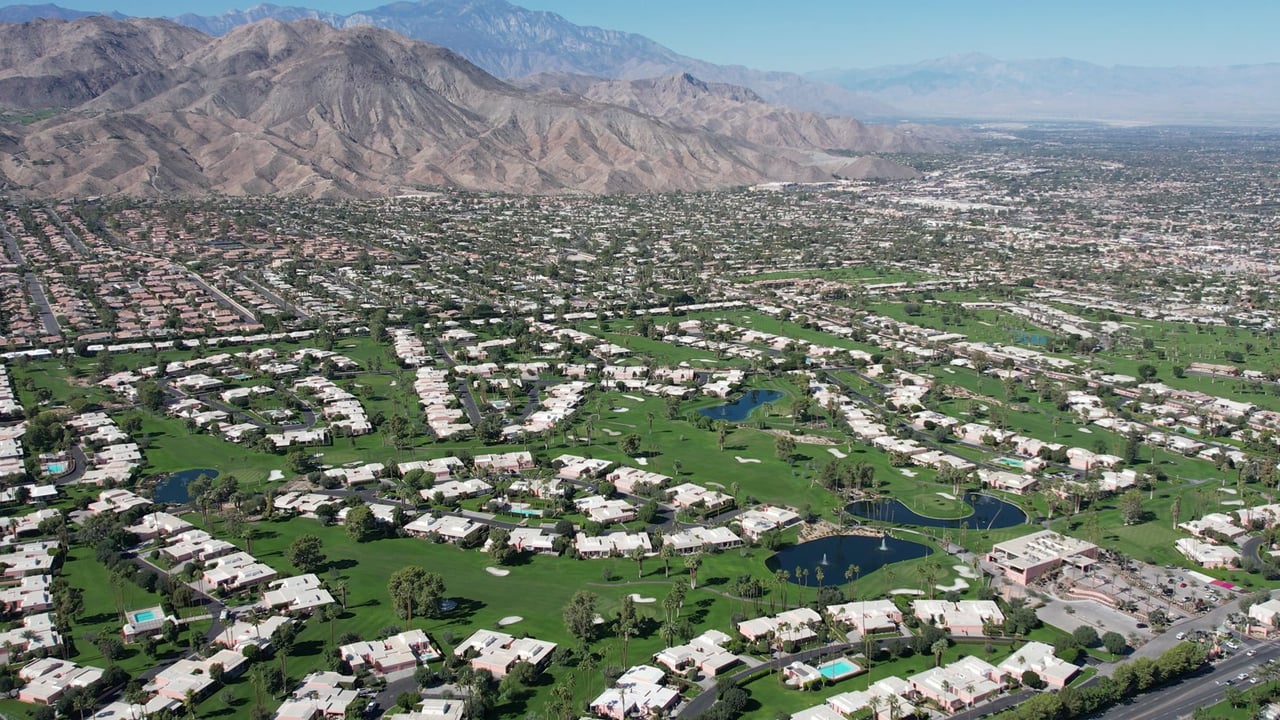
Marrakesh Country Club in Palm Desert, one example of an amenity-oriented community some seasonal buyers consider. Original 4K drone frame supplied by The Tommy Jordan Group.
If you plan to live here year-round, a beautiful January showing only tells you part of the story.
Pay close attention to the age and service history of the HVAC system, window condition, shade, insulation where visible or documented, recent summer utility bills when available, pool equipment, irrigation, and how much direct sun reaches the rooms and outdoor areas you expect to use.
Location also becomes a year-round decision. Think about groceries, healthcare, work, school if relevant, restaurants you use regularly, and how much driving you want to do when it is extremely hot outside.
A standard showing is not enough to answer all of those questions. The Palm Springs area home inspection checklist goes deeper into HVAC, pools, irrigation, drainage, wind, dust, vacancy clues, and other desert-specific items worth evaluating before closing.
Seasonality is not just a weather story. It changes how busy parts of the valley feel.
The City of Palm Springs estimates nearly 50,000 year-round residents and says that figure doubles during the winter snowbird season. Palm Desert currently lists 53,087 permanent residents and another 32,000 seasonal residents.
That does not mean every neighborhood or club follows the same pattern. Some communities maintain a strong year-round population, while others become noticeably quieter after spring.
If social activity matters to you, ask how many nearby homes are occupied year-round, which club or community amenities operate through summer, whether restaurant or event schedules change, and what the neighborhood actually feels like in July and August.
Downtown Palm Springs during the cooler season, when seasonal residents and visitors add to the city's activity. Original footage frame supplied by The Tommy Jordan Group.
Still deciding whether the desert should be your primary home or a seasonal escape? Use the Palm Springs Area Relocation Guide to compare cities, lifestyles, and the priorities that matter most before you narrow your home search.
Leaving for the summer does not pause the house.
Insurance, HOA dues where applicable, minimum utility charges, landscaping, pool service, pest control, cooling, irrigation, and routine maintenance can continue whether you are in town or not. A small leak, failed air conditioner, irrigation problem, or security issue can become more serious when nobody is checking the property regularly.
Before buying a seasonal home, decide who will be responsible while you are away. That may be a trusted neighbor, professional home-watch service, property manager, community staff where offered, or a combination of smart-home monitoring and scheduled in-person checks.
Some cities also have local programs that can help in limited situations. Palm Desert, for example, offers a year-round Vacation Home Check Program through Citizens on Patrol for eligible non-gated single-family homes when residents are away for an extended period.
That kind of program is useful, but it is not a substitute for understanding your insurance requirements, maintaining the property, or having someone who can respond quickly if a problem occurs.
If you own homes in more than one state, do not assume that calling the desert property a “second home” automatically determines your California tax status.
California residency is fact-specific. The state looks at whether you are in California for more than a temporary or transitory purpose and where you are domiciled. Part-year residents and nonresidents may also owe California tax on certain California-source income, including rent from California real property or the sale of California real property.
If the full-time-versus-seasonal decision affects where you plan to establish residency, work, operate a business, or earn rental income, review the situation with a qualified tax professional before relying on a day-count rule or assumption from another state.
The right property type depends more on your routine than on a generic rule about what a “desert home” should be.
If you are still choosing between cities, the guide to Palm Springs versus Palm Desert is a useful next comparison.
The Palm Springs area can work extremely well as either a primary residence or a seasonal home, but those two ownership styles ask different things from the property.
Full-time buyers need to care more about summer performance, daily convenience, and year-round community life. Seasonal owners need a strong plan for maintaining and monitoring a home they may leave for months at a time.
Choose the way you want to live first. Then choose the city, community, and house that make that routine easy rather than forcing your routine to fit the house.
Both can work well. Full-time living is a better fit if you are comfortable with extreme summer heat and want the desert to function as your everyday home. Seasonal living can be attractive if you mainly want the cooler months and are prepared to manage a second property while away.
At Palm Springs Regional Airport, 1991–2020 climate normals show a normal daily high of 108.6°F in July and 108.1°F in August. Individual days can be hotter.
Yes. The City of Palm Springs estimates that its nearly 50,000 year-round population doubles during the winter snowbird season. Individual neighborhoods and communities can still vary significantly.
No. Simply owning or seasonally using a California home does not by itself answer the residency question. California uses a fact-specific residency standard, and California-source income can create tax obligations even for nonresidents. Get individual tax advice if residency matters to your plans.
There is no single best property type. Many seasonal buyers prioritize low-maintenance landscaping, reliable mechanical systems, security and monitoring, manageable exterior responsibilities, and community services that are clearly defined in the HOA documents.
If possible, yes. A summer visit lets you experience the heat, traffic patterns, neighborhood activity, errands, outdoor routines, and the way a specific home performs during the season that differs most from a winter house-hunting trip.
Tommy Jordan is a California real estate agent (CA DRE #01887038) and leads The Tommy Jordan Group at eXp Realty (CA DRE #02187306). He helps buyers and sellers throughout Palm Desert, Rancho Mirage, La Quinta, Indian Wells, Palm Springs, and the greater Coachella Valley, and is known for honest local guidance and practical relocation advice. Learn more about Tommy Jordan or watch the Tommy Jordan | Palm Springs Area Living YouTube channel.

If you’re thinking about moving to the Palm Springs area, our team is here to help make the process simple and stress free.
We’ve helped hundreds of buyers relocate to the Palm Springs area, and we’d love to help you find the right home and community for your lifestyle.
Start by getting your FREE Palm Springs Area Relocation Guide:
https://tommyjordanre.com/relocation-guide
Have questions or ready to start your home search?
Call or Text: (760) 469-9182
Email: [email protected]
Whether you’re moving next month or just starting your research, we’re here to help every step of the way.
Palm Springs
How summer heat, winter seasonality, home maintenance, carrying costs, community rhythm, and California residency questions change when the desert is your primary home… Read more
Construction is underway near Highway 111, but sales have not opened yet. Here is what Shea Homes has published so far about pricing, home sizes, architecture, ameniti… Read more
Palm Springs
What buyers should know about everyday driving, I-10 vs. Highway 111, seasonal congestion, event traffic, weather closures, transit, and testing real routes before cho… Read more
With ten years of experience as a licensed agent, Tommy is an innovator in utilizing social media marketing to help sell homes. He has a successful YouTube channel with thousands of subscribers, generating hundreds of thousands of views yearly. He stays updated on the latest marketing techniques and ensures each property stands out.
Contact Tommy to Learn More

74801 Hovley Ln E. Palm Desert, CA 92260 Tommy Jordan | CA DRE# 01887038