Living in South Palm Desert: Homes, Walkability, and No-HOA Options
Palm Desert Tommy Jordan August 11, 2026
Palm Desert Tommy Jordan August 11, 2026
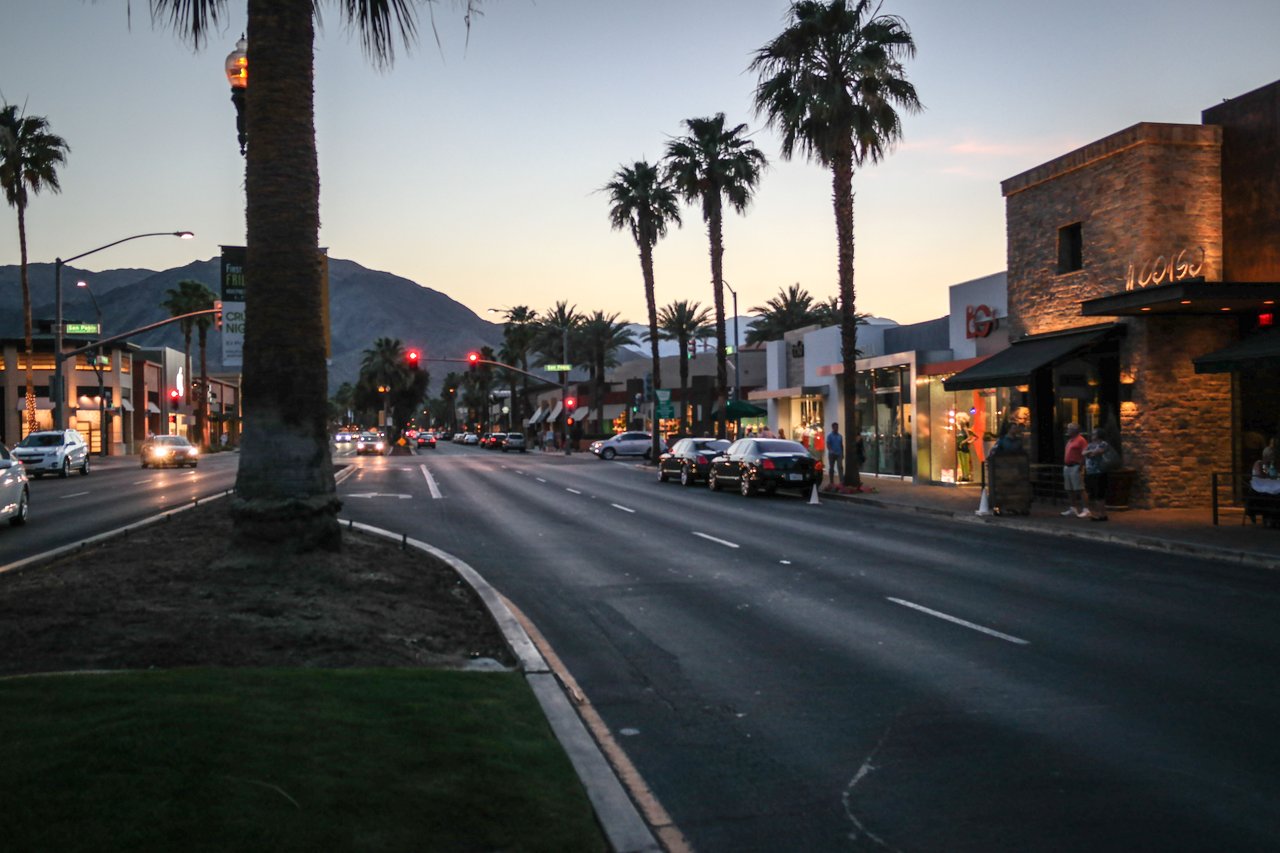
South Palm Desert can look simple on a map: homes near El Paseo, Highway 74, and the Santa Rosa Mountain foothills. From a buyer’s perspective, it is not one uniform neighborhood.
A property close to El Paseo may offer a practical walking route to selected restaurants or shops. A few blocks farther south, a buyer may be comparing established non-gated streets, larger lots, custom architecture, private pools, or foothill settings. Nearby attached homes and private communities can create a completely different ownership structure.
That variety is the appeal, but it is also the reason broad labels can be misleading. “South Palm Desert,” “walkable,” and “no HOA” all need to be tested against the exact address.
This guide goes beyond the citywide overview and explains how to evaluate an individual South Palm Desert home before making an offer.
South Palm Desert can be a strong fit for buyers who value El Paseo access, mountain proximity, established homes, architectural variety, and the possibility of non-gated ownership. The practical experience changes by street and property. Some locations are meaningfully walkable; others still require a car. Some detached homes have no HOA dues; others are governed by an association, recorded restrictions, or shared-maintenance obligations. Older and remodeled homes may also require closer review of permits, systems, drainage, insurance, and renovation quality.
This guide combines Tommy Jordan’s observations from the source video with current information from the City of Palm Desert, Walk Score, the California Department of Real Estate, FEMA, and CAL FIRE. Walkability scores and public resources were reviewed on July 21, 2026; buyers should still verify the exact route and parcel during due diligence.
South Palm Desert is better understood as a group of different residential settings than as one subdivision with one set of rules.
A buyer may be looking at:
Those choices should not be compared only by price per square foot. The ownership responsibilities, usable lot, renovation quality, daily route, and recurring expenses may be substantially different.
For the broader city layout, read the complete guide to moving to Palm Desert. This article focuses only on the property-level questions that become especially important in South Palm Desert.
Tommy identifies El Paseo access as one of South Palm Desert’s defining advantages. The City of Palm Desert’s General Plan describes El Paseo as a corridor with wide sidewalks, landscaping, tree shade, and street furniture, while also acknowledging that pedestrian conditions vary elsewhere in the city.
“Palm Desert’s a really big city, so it’s not really walkable, but if you’re in South Palm Desert, it is.” — Tommy Jordan
The useful buyer interpretation is not that every South Palm Desert address is walkable. It is that the area contains some of Palm Desert’s strongest opportunities for walking to selected destinations.
As of July 21, 2026, Walk Score rated the broader South Palm Desert neighborhood at 52, or “Somewhat Walkable,” while the El Paseo location itself scored 86, or “Very Walkable.” That gap shows why the exact address matters.
Before treating walkability as a reason to pay more, test the route to the places you will actually use:
A listing description that says “close to El Paseo” may mean a comfortable walk, a short bike ride, or simply a convenient drive. The map label alone does not answer the question.
In the source video, Tommy moves street by street and points out Spanish or hacienda-inspired homes, desert-modern designs, breeze-block details, butterfly roofs, flat-roof mid-century forms, longer driveways, private pools, and homes that feel more custom than a uniform tract.
“It doesn’t feel like a cookie-cutter neighborhood.” — Tommy Jordan
That architectural range is one of the area’s strongest advantages, but it makes comparison more complicated. Two nearby homes may differ materially in age, lot size, permitted square footage, renovation quality, orientation, privacy, and the condition of major systems.
Tommy also notes that some streets include quarter-acre or larger lots, longer driveways, pools, and stronger mountain presence. Those are examples from the neighborhood—not guarantees attached to every South Palm Desert property.
When comparing homes, separate the qualities that belong to the location from those that belong to the individual property:

Public-domain photo by Friedpez, via Wikimedia Commons.
Tommy’s video highlights a large non-gated portion of South Palm Desert where buyers may find detached homes without monthly HOA dues. That can be attractive to buyers who want fewer recurring association costs or more direct control over their property.
Non-gated does not automatically prove that a home has no HOA, no recorded covenants, or no shared obligations.
The California Department of Real Estate explains that a preliminary title report identifies liens and encumbrances affecting a property. For a South Palm Desert purchase, that review should be used alongside the seller’s disclosures and any available association documents.
Confirm in writing:
A home without HOA dues may still require a larger private maintenance budget for landscaping, a pool, exterior improvements, security, and long-term repairs. Compare the complete ownership cost, not only the HOA line.
Planning a move to Palm Desert? Use the Palm Springs Area Relocation Guide to organize your city, neighborhood, and home-search questions before touring properties.
Established South Palm Desert homes can offer locations, lots, and architecture that are difficult to reproduce in newer construction. Age itself is not the problem. The important question is what has been updated, what remains original, and whether the work was properly documented.
The City of Palm Desert’s current permit portal allows users to apply for and track permits, while the City’s plan-review guidance shows that residential alterations can involve site plans, structural information, energy documentation, exterior elevations, and mechanical, electrical, and plumbing plans.
For a remodeled home, ask for permits and supporting documentation for work such as:
A polished interior does not confirm that the roof, plumbing, electrical service, sewer line, HVAC equipment, windows, or pool systems were replaced. Inspection and document review should match the age and complexity of the house.
Mountain proximity can improve views, privacy, and the sense of place. It can also change the questions a buyer should ask about an individual lot.
Review the exact parcel for:
FEMA’s Map Service Center allows an address search for current flood-map products. CAL FIRE’s current Fire Hazard Severity Zone resources likewise allow buyers to review mapped hazard information; CAL FIRE emphasizes that “hazard” describes physical conditions and is not the same as the property’s complete risk.
The goal is not to assume that every foothill home has a particular hazard. It is to make sure a view premium is evaluated together with the parcel’s access, drainage, disclosures, insurance, and maintenance requirements.
Photo by Scott Hendrickson on Unsplash.
South Palm Desert includes detached non-gated homes, attached residences, association-managed properties, and private communities. The best choice depends on how much maintenance, control, and shared service you want.
A detached no-HOA home may offer more control and fewer association payments, while leaving the owner responsible for every exterior system, vendor, and reserve. An association property may bundle common-area care, exterior work, insurance, gates, pools, or amenities, but it may also impose rules, assessments, and financial obligations.
Use the exact documents and current costs for the property. The existing guides to Palm Desert gated versus non-gated neighborhoods and Palm Desert HOA fees explain those ownership models in greater detail.
South Palm Desert may deserve a closer look when a buyer prioritizes:
It may be a weaker fit when the buyer prioritizes:
Neither list determines whether the area is “better.” It clarifies which trade-offs are most likely to matter in the search.
You can browse current Palm Desert homes for sale, then narrow the search using the property-level questions above.
South Palm Desert’s value is not captured by one feature. It is the combination of El Paseo access, mountain setting, established housing, architectural range, and multiple ownership models.
Those same strengths make shortcuts risky. A broad neighborhood label cannot confirm walkability, HOA status, legal improvements, system condition, drainage, insurance, or total ownership cost.
The strongest decision comes from matching the exact property—not merely the South Palm Desert name—to the way you expect to live and maintain the home.
Parts of it are. Walk Score currently rates the broader neighborhood as “Somewhat Walkable,” while El Paseo itself rates “Very Walkable.” Conditions change by address, route, crossing, destination, and season, so buyers should test the exact trip.
Yes, some established non-gated homes are offered without monthly HOA dues. Buyers should verify the exact parcel through seller disclosures, the preliminary title report, recorded restrictions, and any shared-maintenance documents.
Tommy’s source video shows Spanish or hacienda-inspired homes, desert-modern designs, breeze-block and butterfly-roof details, flat-roof mid-century forms, detached homes with pools, and properties with larger lots. Attached and private-community options are also present in the broader area.
Many established homes predate newer North Palm Desert development, but age and condition vary. Buyers should distinguish an original home from a cosmetic remodel or a fully documented renovation and inspect the major systems accordingly.
Not necessarily. A home can lack monthly HOA dues and still be affected by zoning, recorded covenants, easements, shared obligations, or permit requirements. The documents for the specific property control.
Review access, grading, drainage, retaining walls, FEMA flood-map information, current fire-hazard mapping, insurance availability, sun and wind exposure, and any condition that could affect the view or usable lot.
Tommy Jordan is a California real estate agent (CA DRE #01887038) and leads The Tommy Jordan Group at eXp Realty (CA DRE #02187306). He helps buyers and sellers throughout Palm Springs, Palm Desert, Rancho Mirage, Indian Wells, La Quinta, and the greater Coachella Valley, and is known for honest local guidance and practical relocation advice. Learn more about Tommy Jordan or watch the Tommy Jordan | Palm Springs Area Living YouTube channel.

If you're thinking about moving to the Palm Springs area, our team is here to help make the process simple and stress free.
We've helped hundreds of buyers relocate to the Palm Springs area, and we'd love to help you find the right home and community for your lifestyle.
Start by getting your FREE Palm Springs Area Relocation Guide:
https://tommyjordanre.com/relocation-guide
Have questions or ready to start your home search?
Call or Text: (760) 469-9182
Email: [email protected]
Whether you're moving next month or just starting your research, we're here to help every step of the way.
Palm Springs
How summer heat, winter seasonality, home maintenance, carrying costs, community rhythm, and California residency questions change when the desert is your primary home… Read more
Construction is underway near Highway 111, but sales have not opened yet. Here is what Shea Homes has published so far about pricing, home sizes, architecture, ameniti… Read more
Palm Springs
What buyers should know about everyday driving, I-10 vs. Highway 111, seasonal congestion, event traffic, weather closures, transit, and testing real routes before cho… Read more
With ten years of experience as a licensed agent, Tommy is an innovator in utilizing social media marketing to help sell homes. He has a successful YouTube channel with thousands of subscribers, generating hundreds of thousands of views yearly. He stays updated on the latest marketing techniques and ensures each property stands out.
Contact Tommy to Learn More

74801 Hovley Ln E. Palm Desert, CA 92260 Tommy Jordan | CA DRE# 01887038
