Buying a Home in the Palm Springs Area From Canada: A Complete Guide
Palm Springs Tommy Jordan July 27, 2026
Palm Springs Tommy Jordan July 27, 2026
Buying a home in the Palm Springs area from Canada is entirely possible, and Canadian buyers have long been part of the desert's seasonal-home market.
The purchase itself may look familiar: choose a property, negotiate an offer, complete inspections, arrange funds, and close through escrow. The cross-border details are where the process becomes different. Buyers who want a local closing overview can also review how escrow works when buying in Palm Desert.
A Canadian buyer must plan for currency conversion, U.S. financing, property taxes, insurance, time spent in the United States, Canadian residency requirements, rental-income reporting, and the tax consequences of eventually selling.
The right home also depends on more than its address. Palm Springs, Palm Desert, Rancho Mirage, Indian Wells, and La Quinta offer different community structures, HOA costs, golf options, rental rules, and day-to-day lifestyles.
Yes. Canadians can purchase real estate in Palm Springs and the surrounding desert cities, but owning the property does not provide immigration status or an automatic right to remain in the United States. Before buying, choose a funding and currency strategy, calculate the complete annual carrying cost, track U.S. travel days, verify HOA and rental restrictions, obtain an insurance quote, and coordinate cross-border tax and legal advice for ownership and eventual resale.
This article combines Tommy Jordan's local buyer guidance with current information from U.S., Canadian, California, and Riverside County government sources. Tax, immigration, financing, insurance, HOA, and rental rules can change and may apply differently to each buyer and property.
A Canadian citizen does not need to become a U.S. resident to purchase a California home. The property may be used as a seasonal residence, second home, or rental, subject to the applicable laws, financing terms, insurance policy, and community rules.
Homeownership does not provide a separate right to live or work in the United States. Your ability to enter and remain in the country is determined under U.S. immigration and border rules, not by the deed to your house.
That distinction should shape the purchase. A home used for short vacations may require a different location and maintenance plan than one occupied for an entire winter season.
Canadian buyers may purchase with cash or seek financing through a lender that works with foreign nationals or cross-border clients. Programs vary, so there is no universal down payment, reserve requirement, interest rate, or documentation package.
A lender may review Canadian income, assets, credit information, tax documents, and the intended use of the property. A U.S. bank account can simplify deposits, closing costs, taxes, HOA payments, and utilities, but whether it is required before applying depends on the lender.
Currency movement also affects the true cost. A purchase that fits the budget at one exchange rate may feel different when the down payment or closing funds are converted.
Before making offers, confirm:
The Palm Springs area is in Riverside County. California's general property-tax levy is limited to 1% of assessed value, but the total bill can include locally approved taxes and city or district direct assessments. Do not assume every property has an identical tax rate or simply apply a blanket 1.25% estimate.
A change in ownership generally triggers reassessment to current fair market value unless an exclusion applies. The county may then issue a supplemental tax bill based on the difference between the prior assessed value and the new value. That bill is separate from the annual bill and may be sent directly to the owner rather than the mortgage company.
Some properties also carry Mello-Roos or other special assessments. Verify them through the preliminary title report, tax records, seller disclosures, and escrow.
Your budget should also include insurance, HOA dues, possible club costs, utilities, pool and landscaping service, HVAC maintenance, repairs, home-watch service, and currency-conversion costs. Obtain an insurance quote during the investigation period because coverage and pricing are property-specific. For a deeper look at association expenses, read what Palm Desert HOA fees can cover and cost.
Many Canadian buyers begin by searching only in Palm Springs because it is the best-known city name. Palm Springs may be the right answer, but it is not the only option. Start with the guide comparing Palm Springs and Palm Desert if you are still deciding between the two best-known starting points.
Palm Desert offers a central location, shopping, dining, golf, and both gated and non-gated neighborhoods. Rancho Mirage is known for privacy and luxury communities. Indian Wells has a quiet, resort-oriented character. La Quinta offers mountain scenery, Old Town, golf, and communities extending toward PGA West.
Spend time in the area before choosing. Drive Highway 111, visit neighborhoods at different times of day, and compare airport access, wind exposure, HOA structure, home age, healthcare, shopping, and the routes you would use regularly. Architecture-minded buyers may also want the guide to Palm Springs Mid-Century home styles.

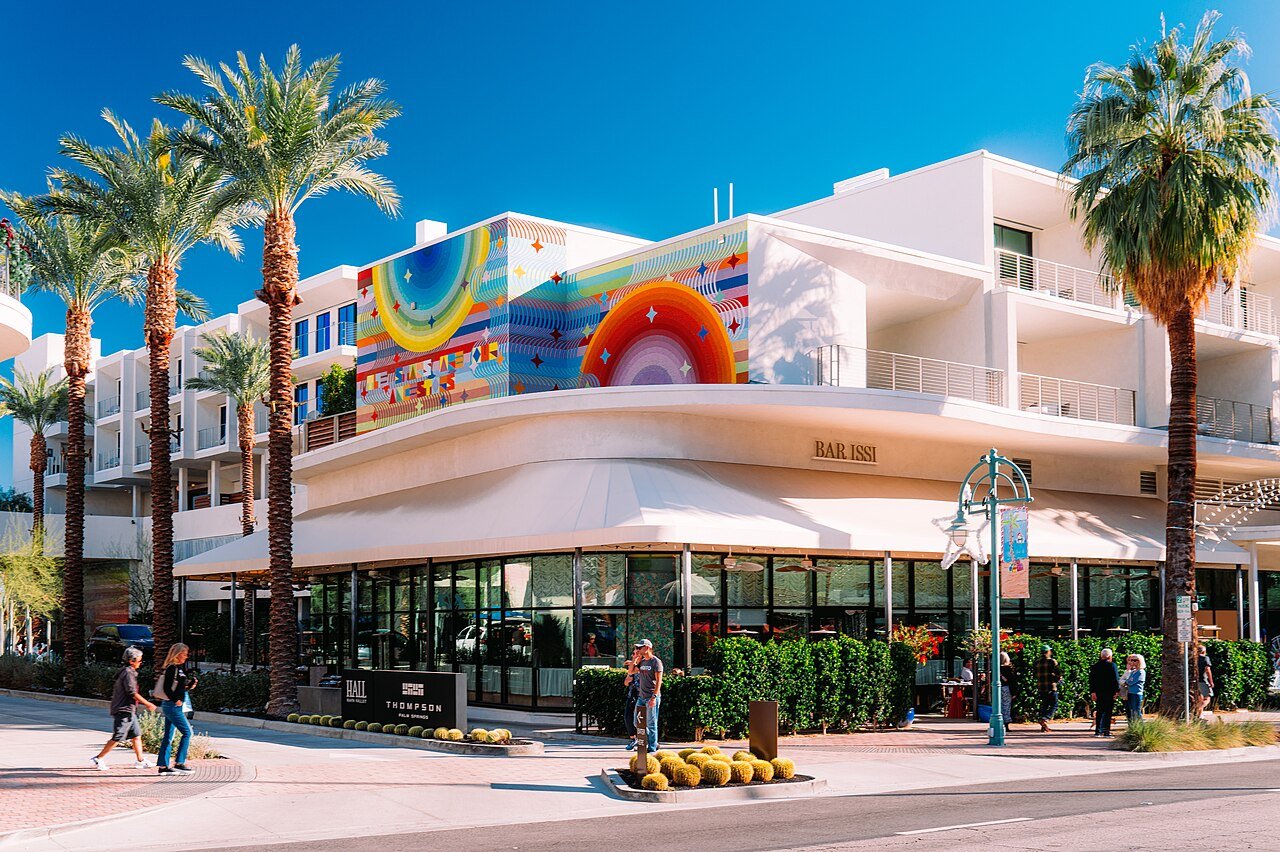
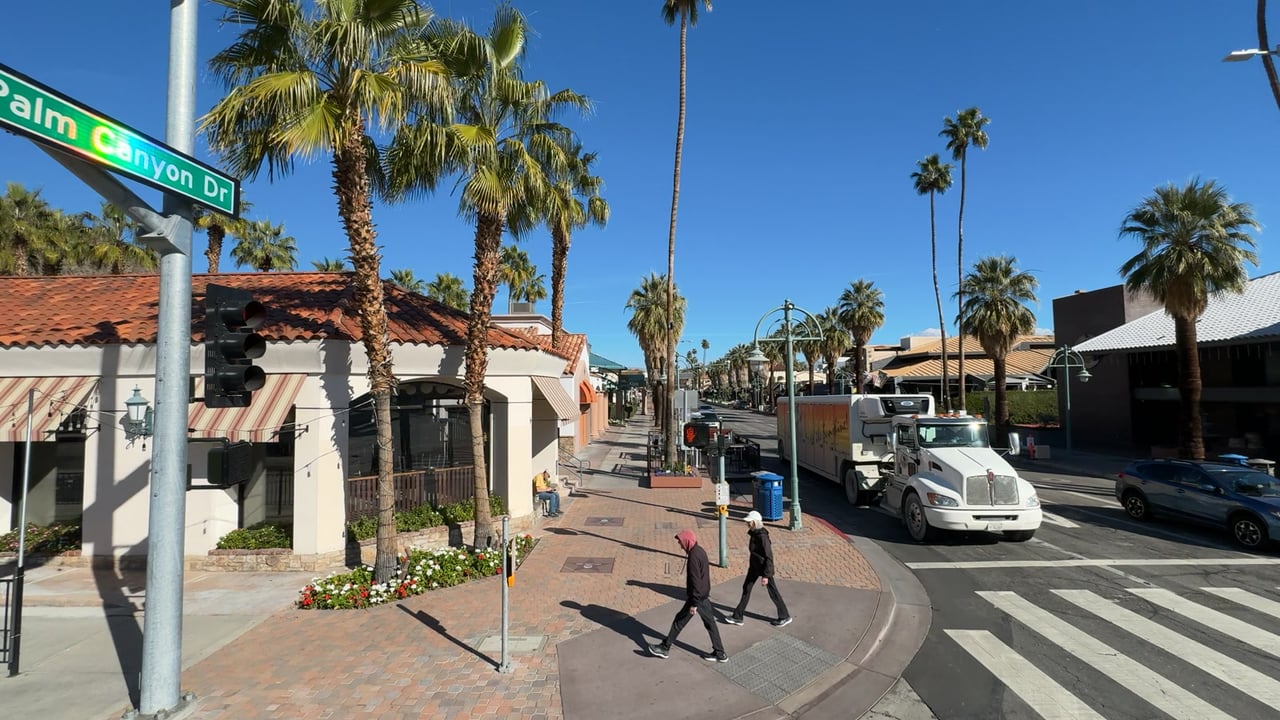
Photo by M.Welp, CC BY-SA 4.0, via Wikimedia Commons.
Use The Tommy Jordan Group's Palm Springs Area Relocation Guide to compare cities, communities, daily-life considerations, and the home-buying process before your next desert visit.
Older advice often said the seller normally paid both agents and the buyer did not need to think about compensation. California's current process requires a more direct conversation.
A buyer working with an agent should expect a written buyer-broker representation agreement explaining the services, compensation, payment terms, and duration. Compensation is negotiable; there is no legally required “standard” rate.
Depending on the transaction, compensation may be paid by the buyer, covered in whole or part through terms negotiated with the seller, or handled through another agreed structure. Understand the obligation before touring and before writing an offer.
The familiar “182-day rule” is too simple to use as a complete plan.
U.S. Customs and Border Protection says Canadian citizens arriving by land or sea may generally visit for up to six months, but admission remains case-specific. Travelers may need to show that their primary residence and significant ties remain in Canada. Owning a California home does not extend the period authorized for a visit.
Tax residency is separate. The IRS substantial presence test uses days from the current year and weighted days from the two preceding years. A Canadian who spends long winter seasons in the United States can therefore create a filing issue without spending 183 days there in the current calendar year.
Some individuals who are present fewer than 183 days in the current year and maintain a qualifying closer connection and tax home in Canada may be able to claim an exception, generally using IRS Form 8840. A cross-border tax adviser should confirm eligibility and deadlines.
Also check your home province's requirements. Provinces and territories set their own minimum-presence rules for public health coverage, and extended absences may need to be reported. Canadian public coverage can leave significant gaps for care received in the United States, so private medical coverage should be reviewed.

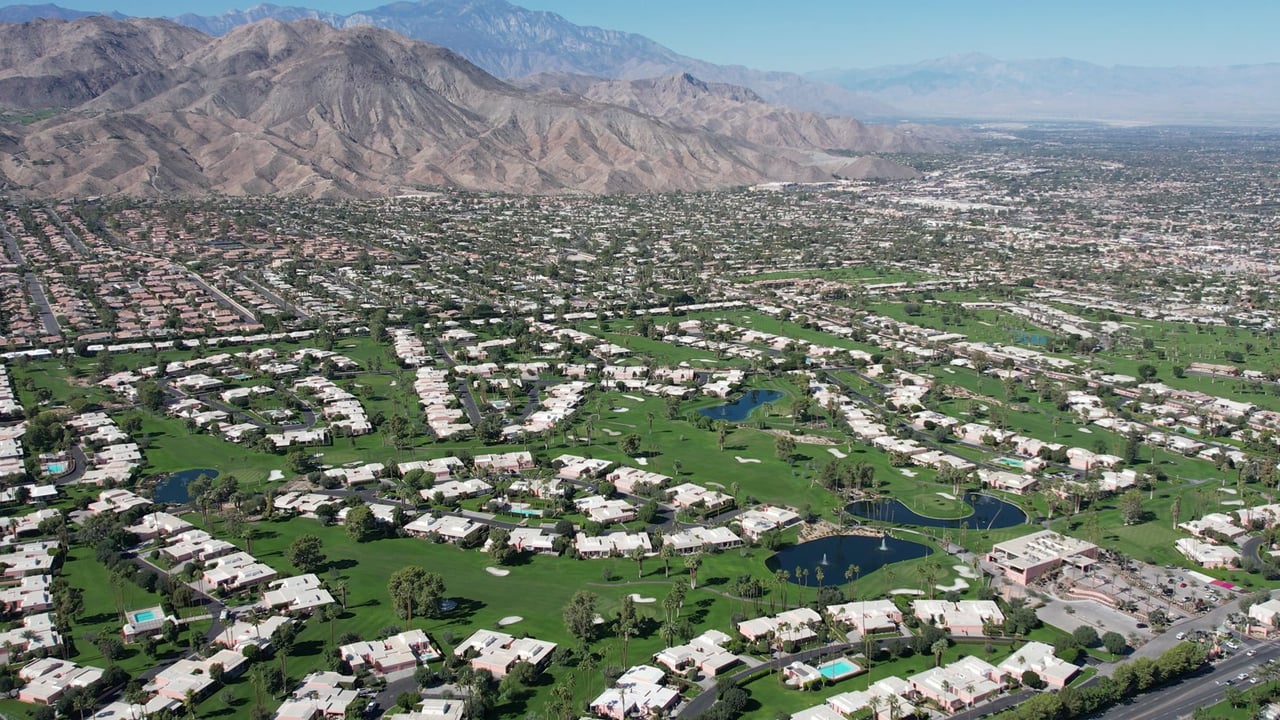
Photo by APK, CC BY-SA 4.0, via Wikimedia Commons.
Renting the home while you are in Canada may help offset carrying costs, but never assume rental income is guaranteed.
Before relying on a rental plan, verify the city's rules, the HOA's restrictions, the lender's requirements, and the insurance policy. Minimum stays, permits, occupancy, local-contact rules, and rental caps can differ by city and community. For one city-specific example, review the Palm Springs vacation-rental rules guide.
Rental income from California property can create U.S. federal and California tax obligations. A nonresident owner may be taxed on gross U.S. rental income unless a valid election is made to treat it as effectively connected, which can permit eligible deductions and requires U.S. filings. California withholding may also apply when a property manager pays rent to a nonresident owner.
On the Canadian side, a home used primarily for personal enjoyment is generally treated differently for Form T1135 purposes than property held mainly to produce rental profit. Actual use matters. Discuss the intended plan with a cross-border accountant before the first tenant arrives.
FIRPTA—the Foreign Investment in Real Property Tax Act—often surprises foreign owners when they sell U.S. real estate.
FIRPTA generally requires withholding when a foreign person sells a U.S. real-property interest. The standard rate is 15% of the amount realized, with limited residential exceptions or reduced rates. Qualifying residence purchases at $300,000 or less may be exempt, while qualifying residence purchases above $300,000 and up to $1 million may use a 10% rate.
Withholding is not necessarily the seller's final tax bill. It is an advance collection mechanism. The seller may need a U.S. taxpayer identification number, may file a U.S. return, and may be able to request reduced withholding when the expected tax is lower.
California has a separate real-estate withholding system using Form 593 unless an exemption or alternative applies. Plan for both systems well before resale so missing identification numbers or late applications do not create unnecessary delays.
An HOA may maintain gates, roads, landscaping, roofs or exteriors, community pools, fitness facilities, or common insurance. In a country-club community, HOA dues may be separate from golf, social, food-and-beverage, transfer, or initiation charges. Buyers weighing those structures can compare Palm Desert country clubs and non-gated neighborhoods.
Before removing contingencies, review the budget, reserves, special assessments, meeting minutes, litigation, rental rules, and what the HOA insures. Confirm whether club membership is required, optional, or separate from ownership.
Remote ownership also requires a summer plan. Air-conditioning failures, water leaks, pool equipment, irrigation, storms, and pest issues can become expensive when no one is checking the property. Smart-home devices help, but they do not replace a trusted local person who can enter the home and coordinate repairs.
No single professional should answer every cross-border question. Your team may include a local real estate agent, cross-border lender, U.S.-Canada tax adviser, attorney, escrow and title team, insurance professional, property manager or home-watch provider, and foreign-exchange specialist.
Bring them into the process early enough to influence the purchase—not merely to solve problems after closing.
Buying a Palm Springs area home from Canada can create an exceptional seasonal lifestyle, but the best purchase is one that works on both sides of the border. For broader regional context, read 5 Reasons People Are Moving to the Palm Springs Area.
The home should fit your preferred city, routine, community style, and budget. The ownership plan should also account for currency, taxes, travel days, healthcare, insurance, remote maintenance, rental rules, and resale.
Once those decisions are organized, the real estate portion becomes much clearer. Instead of asking only, “Do I like this house?” you can ask the more important question: “Does this property support the way I intend to own and use it?”
Yes. Canadian citizens can purchase real estate in Palm Springs and the surrounding Coachella Valley. Ownership does not provide U.S. immigration status, permission to work, or an automatic right to remain in the country.
Not every cash purchase or loan program has the same requirement, but a U.S. account can make closing, taxes, utilities, HOA payments, and maintenance easier. Ask the lender, escrow holder, and bank what must be established and when.
Do not rely on a universal 182-day promise. CBP determines admission and the authorized period for each visit. Separately, the IRS substantial presence test counts weighted days across three years, and provincial health-plan rules vary.
California's general levy is limited to 1% of assessed value, but Riverside County bills may also include locally voted taxes and direct assessments. A purchase can trigger reassessment and one or more supplemental bills.
Possibly, but permission depends on the city, HOA, lender, and insurance policy. Rental income also creates U.S., California, and potentially Canadian reporting obligations. Verify the rules for the exact property before relying on projected rent.
FIRPTA is a federal system that generally requires withholding when a foreign person sells U.S. real estate. The standard rate is often 15% of the amount realized, although qualifying residential transactions may use a reduced rate or exemption. Withholding is not necessarily the final tax liability.
There is no universally best structure. The choice can affect financing, liability, estate planning, annual filings, taxes, and resale. Obtain coordinated legal and tax advice before taking title.
This article is for general educational purposes and is not tax, legal, immigration, lending, insurance, or financial advice. Rules and individual circumstances vary. Consult appropriately licensed professionals in the United States and Canada.
Tommy Jordan is a California real estate agent (CA DRE #01887038) and leads The Tommy Jordan Group at eXp Realty (CA DRE #02187306). He helps buyers and sellers throughout Palm Springs, Palm Desert, Rancho Mirage, Indian Wells, La Quinta, and the greater Coachella Valley, and is known for honest local guidance and practical relocation advice. Learn more about Tommy Jordan or watch the Tommy Jordan | Palm Springs Area Living YouTube channel.
If you're thinking about moving to the Palm Springs area, our team is here to help make the process simple and stress free.
We've helped hundreds of buyers relocate to the Palm Springs area, and we'd love to help you find the right home and community for your lifestyle.
Start by getting your FREE Palm Springs Area Relocation Guide:
https://tommyjordanre.com/relocation-guide
Have questions or ready to start your home search?
Call or Text: (760) 469-9182
Email: [email protected]
Whether you're moving next month or just starting your research, we're here to help every step of the way.
Palm Springs
How summer heat, winter seasonality, home maintenance, carrying costs, community rhythm, and California residency questions change when the desert is your primary home… Read more
Construction is underway near Highway 111, but sales have not opened yet. Here is what Shea Homes has published so far about pricing, home sizes, architecture, ameniti… Read more
Palm Springs
What buyers should know about everyday driving, I-10 vs. Highway 111, seasonal congestion, event traffic, weather closures, transit, and testing real routes before cho… Read more
With ten years of experience as a licensed agent, Tommy is an innovator in utilizing social media marketing to help sell homes. He has a successful YouTube channel with thousands of subscribers, generating hundreds of thousands of views yearly. He stays updated on the latest marketing techniques and ensures each property stands out.
Contact Tommy to Learn More

74801 Hovley Ln E. Palm Desert, CA 92260 Tommy Jordan | CA DRE# 01887038