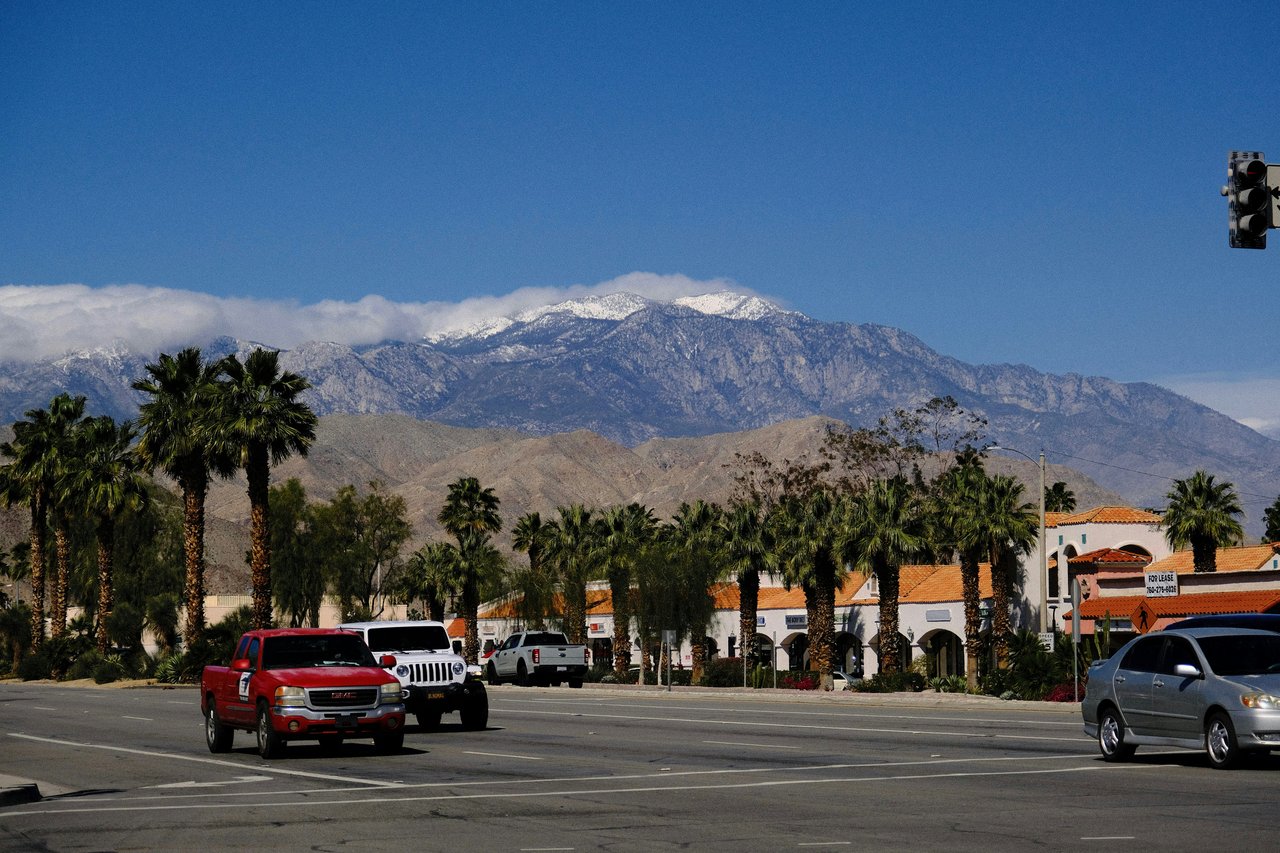
Why Palm Desert Home Prices Vary by Neighborhood
Palm Desert Tommy Jordan July 31, 2026
Palm Desert Tommy Jordan July 31, 2026
Palm Desert can make online home shopping feel inconsistent. Two properties with the same city name and similar square footage may have very different asking prices, HOA obligations, amenities, lot settings, and long-term carrying costs.
That is partly because Palm Desert stretches from newer development near Interstate 10 to established neighborhoods around Country Club Drive and Highway 111, then rises toward El Paseo, Highway 74, and the Santa Rosa Mountains. The housing changes as you move through those areas.
Location is important, but it is not the only explanation. A 55+ community serves a different buyer pool from a non-age-restricted neighborhood. An attached country-club residence is priced differently from a detached home with no HOA. A remodeled home with mountain views cannot be compared fairly with an original-condition property near a major roadway by looking only at price per square foot.
This guide explains the main reasons Palm Desert home prices vary by neighborhood and gives buyers a practical way to compare properties without relying on a citywide average or an outdated listing example.
The goal is not to name one universally “best” part of Palm Desert. It is to show what buyers are actually paying for and which trade-offs come with that choice. For broader city context, start with the complete Palm Desert city guide; before touring homes, review the most common Palm Desert home-buying mistakes.
Palm Desert home prices vary because the city contains several distinct residential markets. Homes closer to the mountains, El Paseo, premium views, and certain private clubs may command more, while northern areas can offer newer construction and more space for the budget. Age restrictions, attached versus detached ownership, HOA services, golf or club access, lot orientation, renovation quality, wind and traffic exposure, and the home's complete monthly cost can all change value. Buyers should compare properties within the same neighborhood type and ownership structure rather than treating every Palm Desert address as interchangeable.
This article begins with Tommy Jordan's local explanation of how location affects Palm Desert pricing, then checks the underlying neighborhood, development, and amenity distinctions against current City of Palm Desert planning materials and official community and club sources. The listing prices and HOA amounts shown in the original video reflect the time of filming and are not presented here as current market figures.
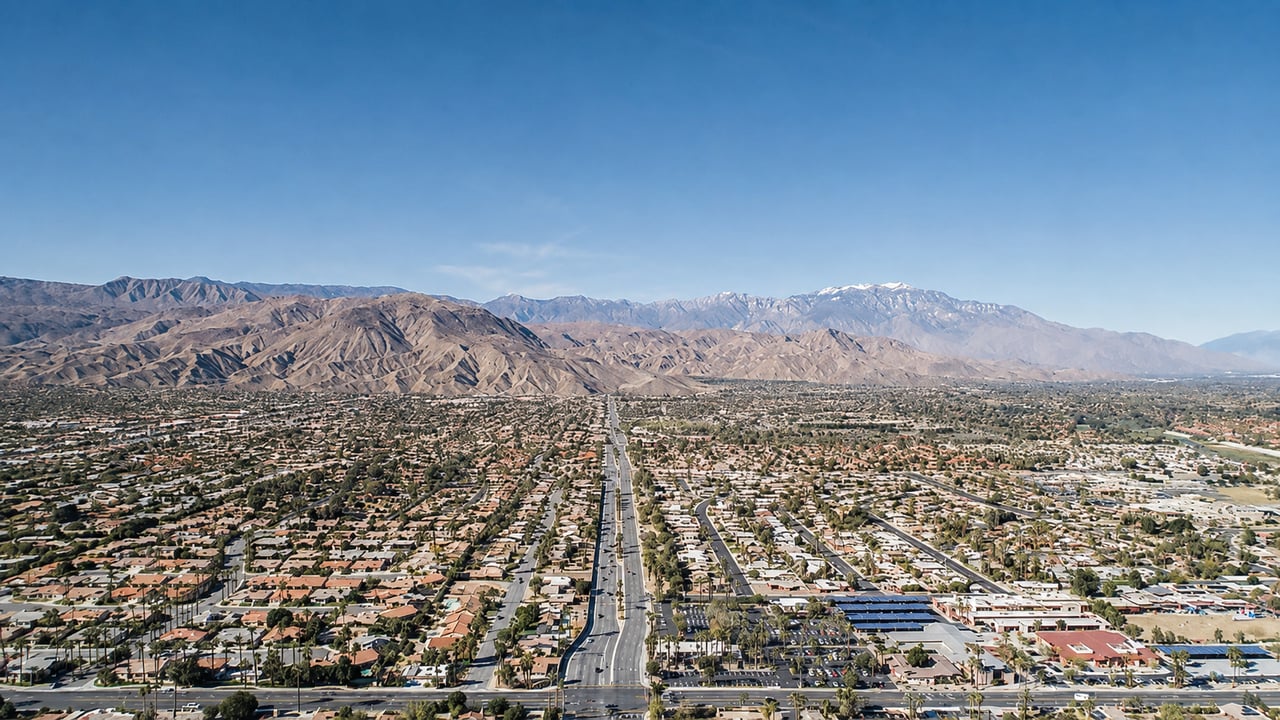
Palm Desert's official General Plan describes a city extending from Interstate 10 past Highway 111 and toward Highway 74 and the Santa Rosa Mountain foothills. It also explains that the historic core developed around Highway 111 and El Paseo, while completion of Interstate 10 shifted substantial development activity north.
That history helps explain why buyers encounter such different housing products under the same city name. Palm Desert includes older custom neighborhoods, attached condominium communities, guard-gated golf developments, active-adult communities, newer master-planned neighborhoods, and luxury homes near the mountains.
Tommy summarizes the central issue early in the video: “Location really affects the price.”
That does not mean location works as a simple north-cheap and south-expensive rule. It means the city's geography provides the starting point, while property type, condition, community structure, and the exact lot determine whether the price makes sense.
Once the city layout makes sense, use the Palm Desert community overview and current Palm Desert homes for sale to compare the neighborhood types with actual inventory.
Northern Palm Desert and nearby Palm Desert-address communities generally contain more recent development, easier Interstate 10 access, and a greater concentration of planned neighborhoods. Buyers may find newer floor plans, more recent mechanical systems, gated communities with focused amenity packages, and homes that provide more interior space for the budget than premium mountain-adjacent areas.
The trade-offs can include more freeway dependence, greater wind exposure in some locations, smaller lots in certain newer developments, and longer drives to El Paseo or the foothills. None of those conditions applies to every property, so buyers should visit at different times and evaluate the exact street.
South Palm Desert rises toward the mountains and includes areas closer to El Paseo, The Living Desert, Highway 74, established non-gated neighborhoods, and private clubs such as Ironwood and BIGHORN. Mountain proximity, mature landscaping, custom architecture, larger lots in some neighborhoods, and stronger views can create a premium.
South Palm Desert also contains older homes and attached residences. A desirable location does not automatically mean the property is updated, detached, low-maintenance, or free of significant HOA and club costs.
The more useful comparison is what the buyer receives in exchange for the location: view, lot, privacy, architecture, convenience, renovation quality, or club access.
If private-club living is part of the appeal, the guide to the most exclusive country-club communities in the Palm Springs area compares Palm Desert's BIGHORN with The Vintage Club in Indian Wells and The Madison Club in La Quinta.
Photo by Scott Hendrickson on Unsplash. Photographed in Palm Desert, California.
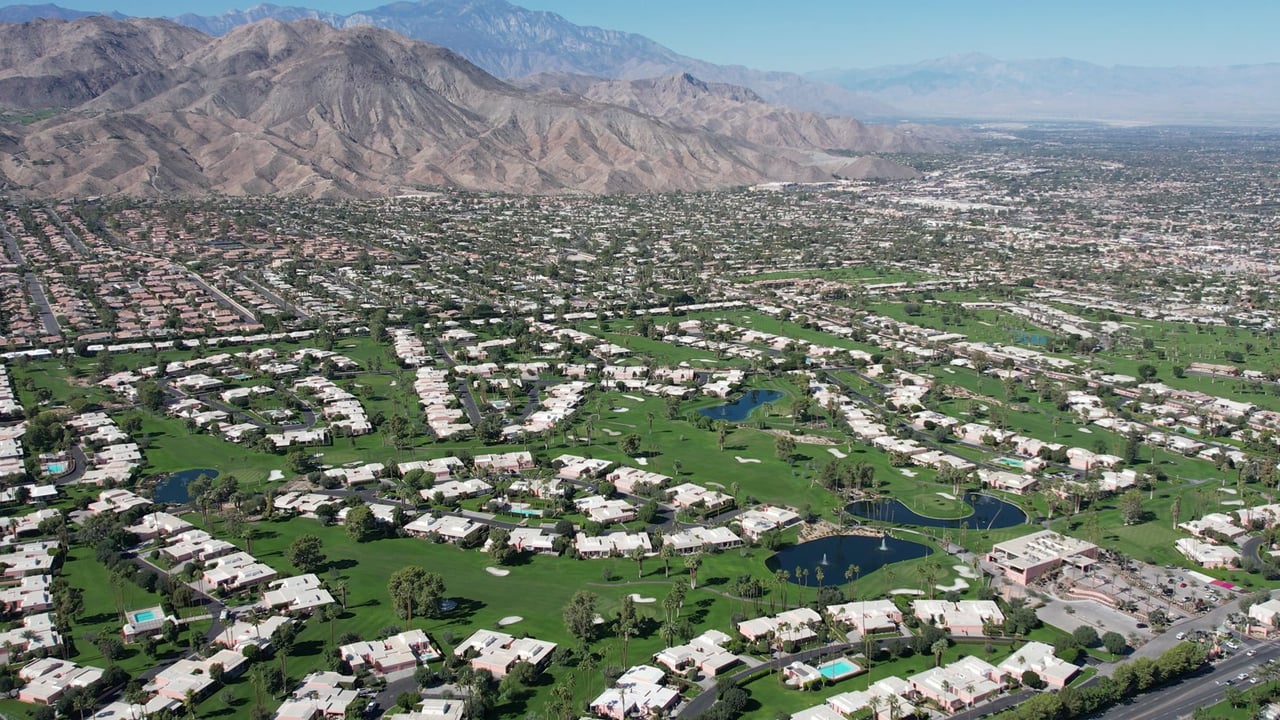
Tommy uses Sun City Palm Desert to illustrate why a home in an active-adult community can be priced differently from a similar-size house elsewhere.
Sun City Palm Desert is a Palm Desert-address 55+ community north of Interstate 10. Its official association materials describe two 18-hole golf courses, extensive recreational amenities, dining, and more than 80 clubs and groups. The City of Palm Desert's General Plan places the community within the city's sphere of influence rather than its historic core.
Age restrictions influence value in several ways:
A lower purchase price does not automatically mean lower total cost, and a large amenity package does not automatically make the community expensive. Review the current association budget, reserve information, rules, insurance, and exact services included with the specific property.
Retirement-oriented buyers can compare those questions with the broader year-round considerations in the guide to retiring in La Quinta. Canadian seasonal buyers should also account for cross-border financing, taxes, travel planning, insurance, and home-watch needs covered in the Palm Springs area Canadian buyer guide.
Start by getting your FREE Palm Springs Area Relocation Guide: download the Palm Springs Area Relocation Guide.
A newer gated home may offer current design preferences, energy features, newer roofs and mechanical systems, smaller maintenance needs, and a controlled neighborhood appearance. It may also come with smaller lots, design restrictions, monthly dues, special taxes, solar agreements, or community rules that affect how the property can be used.
An established non-gated home may offer a larger lot, mature landscaping, more architectural variety, no HOA, and greater control over exterior changes. The trade-off may be older plumbing, electrical panels, windows, roofs, pools, HVAC systems, and renovation work.
As Tommy's examples show, the headline price does not explain whether the buyer is receiving newer systems, a larger lot, more control, or more services. Those details have to be investigated before the buyer removes contingencies.
This is why price per square foot alone can be misleading. A newer home can cost more because the buyer is purchasing updated systems and lower near-term project risk. An older home can command a premium because of its lot, mountain view, architecture, or location, even when major improvements remain.
The guide to Palm Desert gated versus non-gated neighborhoods explains the recurring-cost and lifestyle trade-offs in more detail.
Palm Desert has a large inventory of condominiums, villas, townhomes, and other attached residences, particularly in golf and country-club settings. These can offer strong locations, shared pools, maintained landscaping, security, and a lower-maintenance second-home experience.
A detached home may provide a private lot, private pool, more separation, and greater control, but it also places more exterior maintenance and capital-replacement responsibility on the owner.
This ownership distinction is separate from land tenure. Buyers comparing Palm Desert with Palm Springs should also understand lease land versus fee-simple ownership so they do not confuse a condominium interest, HOA obligation, and ground lease.
When comparing attached and detached homes, look beyond the interior square footage:
A well-run attached community can provide excellent value. A low asking price in a poorly funded association can expose the buyer to assessments, insurance problems, or financing limitations.
Photo by CARTER SAUNDERS on Unsplash. Photographed in Palm Desert, California.
Two homes with similar prices can carry completely different monthly obligations. One HOA may provide little more than gates and common landscaping. Another may include exterior maintenance, roofs, pools, cable, insurance components, tennis, pickleball, fitness, and staffed security.
Country-club membership is often separate from the HOA. A listing inside a golf community does not prove that golf is included, available, transferable, or optional.
Monterey Country Club's official materials currently describe 27 holes of golf along with pickleball, tennis, bocce, and club programming. Ironwood Country Club describes two 18-hole courses plus racquet, fitness, wellness, dining, and social amenities. Those offerings help explain why homes in club environments cannot be compared with non-gated homes using purchase price alone.
For a nearby example of how one golf destination can contain multiple residential associations, gates, home types, and membership choices, review the guide to buying a home in PGA West.
Before relying on an online figure, obtain the current documents and confirm:
Use the detailed guide to Palm Desert HOA fees and what they cover before comparing monthly payments.
Two homes inside the same community can have different values because the lots deliver different experiences.
Important micro-location factors include:
A premium view lot can justify a higher price, but only if the view is protected and the exposure fits the buyer. A golf-front home may be beautiful while also creating privacy, noise, or ball-strike concerns. Visit at several times of day and review future development possibilities before paying for a view.
Palm Desert's housing stock spans many decades. A remodeled home and an original-condition home can sit on similar lots and still require very different budgets after closing.
Review the quality behind the finishes. New flooring and paint do not confirm that the roof, HVAC, plumbing, electrical system, windows, pool equipment, drainage, or waterproofing were updated correctly.
Also verify permits. Unpermitted room additions, enclosed patios, converted garages, relocated kitchens, and altered structural walls can affect insurance, financing, appraisal, resale, and the actual legal square footage.
A higher-priced renovated home may be the stronger value when the work is documented and professionally completed. A lower-priced home can still be attractive when the buyer has a realistic improvement budget and understands the project timeline.
Tommy's broader point applies here: visible finishes are only one part of value. The home-buying mistakes guide goes deeper on cosmetic flips and major systems, while the Palm Desert escrow and contingency guide explains how inspections, disclosures, appraisal, title, and HOA review fit into the purchase process.
Neighborhood value is partly determined by what the owner must continue paying after closing.
Create a property-specific monthly estimate that includes:
A lower-priced property with high recurring costs may not fit the buyer's budget as comfortably as a more expensive non-HOA home. The reverse can also be true when association dues replace exterior maintenance and amenities the owner would otherwise purchase separately.
Second-home buyers should also review financing a Palm Desert second home and how to choose the right desert second home. Canadian owners should add the currency, tax, travel-day, insurance, and property-management considerations in the cross-border buyer guide.
A citywide median can provide context, but it cannot tell you whether one specific house is overpriced. Compare the property with homes that share the same fundamental characteristics. Buyers considering both cities can run the same exercise through the Palm Springs versus Palm Desert comparison instead of assuming one city is universally less expensive.
Use this checklist:
You can browse current Palm Desert homes for sale, but the listing search is only the beginning. The real comparison happens after the homes are grouped by neighborhood type, ownership structure, condition, and total cost.
Palm Desert's housing variety is one of its greatest strengths. It is also the reason broad price comparisons can be misleading.
Northern communities may offer newer homes and more space for the budget. South Palm Desert may command premiums for mountain proximity, established neighborhoods, architecture, privacy, and El Paseo access. Active-adult communities, attached golf residences, non-gated homes, and luxury private clubs each serve different buyers and include different obligations.
That is the practical point behind Tommy's examples: the best value is not necessarily the lowest asking price or price per square foot. It is the property whose location, condition, community structure, and complete cost align with the way the buyer will actually live.
For a broader comparison beyond the city, read Palm Springs versus Palm Desert, the guide to buying in Rancho Mirage, and the Indian Wells city guide.
No. South Palm Desert often carries premiums for mountain proximity, El Paseo access, mature neighborhoods, views, and private-club locations, while northern areas may offer newer construction and more space for the budget. Individual condition, lot, property type, HOA, and exact location can reverse the general pattern.
A condominium may have shared walls, common land, HOA restrictions, and less private outdoor space. A detached home may include a private lot, pool, garage, privacy, and greater control. The condo's HOA may also cover significant services, so compare the complete ownership package rather than only size.
Not automatically. HOA dues and club membership are often separate. Some communities include limited social or golf benefits, while others require or offer separate memberships. Confirm the current written terms for the exact property and club.
Age restrictions reduce the eligible buyer pool, and the homes may be designed around a specific active-adult lifestyle. Pricing also depends on size, condition, lot, amenities, and association obligations. A lower purchase price should still be evaluated alongside the current HOA and complete monthly cost.
A strong, protected mountain view can support a premium, but view quality is subjective and can be offset by afternoon sun, wind, road noise, lack of privacy, or future development. Evaluate the exact lot at different times of day.
No. Newer homes may offer updated systems and floor plans, but they can have smaller lots, HOA restrictions, special taxes, or solar obligations. Older homes may offer superior locations, mature landscaping, architecture, and larger lots but require more renovation and maintenance.
Compare recent closed sales within the same neighborhood type, property type, condition, lot setting, and HOA or club structure. Then calculate the complete monthly ownership cost. A citywide median or active-listing average cannot replace property-specific comparable sales.
The answer depends on maintenance preferences, seasonal routine, golf or club priorities, El Paseo access, freeway access, views, and budget. Low-maintenance attached communities may suit some seasonal buyers, while others prefer a detached non-gated home or a full-service private club.
Tommy Jordan is a California real estate agent (CA DRE #01887038) and leads The Tommy Jordan Group at eXp Realty (CA DRE #02187306). He helps buyers and sellers throughout Palm Springs, Palm Desert, Rancho Mirage, Indian Wells, La Quinta, and the greater Coachella Valley, and is known for honest local guidance and practical relocation advice. Learn more about Tommy Jordan or watch the Tommy Jordan | Palm Springs Area Living YouTube channel.

If you're thinking about moving to the Palm Springs area, our team is here to help make the process simple and stress free.
We've helped hundreds of buyers relocate to the Palm Springs area, and we'd love to help you find the right home and community for your lifestyle.
Start by getting your FREE Palm Springs Area Relocation Guide:
https://tommyjordanre.com/relocation-guide
Have questions or ready to start your home search?
Call or Text: (760) 469-9182
Email: [email protected]
Whether you're moving next month or just starting your research, we're here to help every step of the way.
Palm Springs
How summer heat, winter seasonality, home maintenance, carrying costs, community rhythm, and California residency questions change when the desert is your primary home… Read more
Construction is underway near Highway 111, but sales have not opened yet. Here is what Shea Homes has published so far about pricing, home sizes, architecture, ameniti… Read more
Palm Springs
What buyers should know about everyday driving, I-10 vs. Highway 111, seasonal congestion, event traffic, weather closures, transit, and testing real routes before cho… Read more
With ten years of experience as a licensed agent, Tommy is an innovator in utilizing social media marketing to help sell homes. He has a successful YouTube channel with thousands of subscribers, generating hundreds of thousands of views yearly. He stays updated on the latest marketing techniques and ensures each property stands out.
Contact Tommy to Learn More

74801 Hovley Ln E. Palm Desert, CA 92260 Tommy Jordan | CA DRE# 01887038

